Table of Contents
- What Is MRI Software and Why Do Property Managers Use It?
- Key Features of MRI Software for Property Management
- Lease Management
- Tenant Screening and Onboarding
- Commercial Property Accounting
- Portfolio Reporting and Business Intelligence
- Public Housing and Affordable Housing Support
- How MRI Accounting Software Handles Complex Portfolios
- Who MRI Software Is Best For
- How REA Maximizes MRI for Property Managers
- MRI vs. Other Property Management Accounting Platforms
- Frequently Asked Questions About MRI Software for Property Management
- What does MRI software cost for property managers?
- Is MRI software good for small property managers?
- How does MRI handle lease management for commercial leases?
- Can MRI software handle public housing accounting?
- How does REA support property managers using MRI?
- The Bottom Line on MRI Software for Property Management
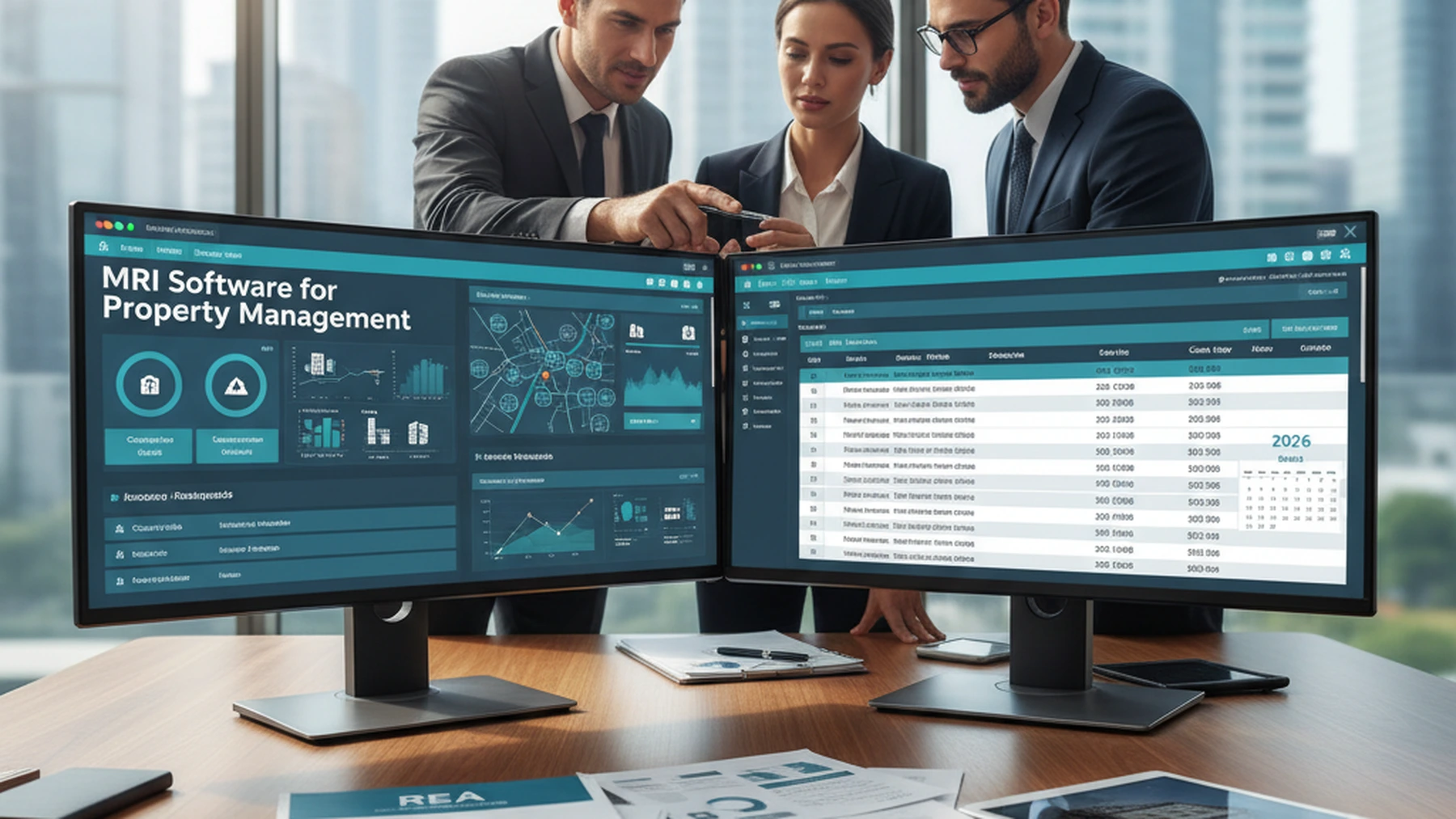
MRI Software is an enterprise-grade platform built for property managers who operate at scale. It handles lease management, portfolio accounting, tenant screening, and financial reporting across commercial real estate and residential portfolios, making it one of the most capable solutions available in 2026.
What Is MRI Software and Why Do Property Managers Use It?
MRI Software (originally Management Reports Inc.) has served the real estate industry since 1971. Its platform is open and configurable, meaning property managers are not locked into a single workflow. The architecture allows third-party integrations, custom reporting, and module-level scalability.
That flexibility is why MRI real estate deployments span everything from boutique commercial operators to large institutional funds managing millions of square feet. For property managers overseeing both residential and commercial property, MRI functions as a single source of truth rather than a patchwork of disconnected tools.
The platform covers three core functional areas:
- Property and lease management, lease abstractions, renewals, escalations, and compliance tracking
- Accounting and financial reporting, general ledger, accounts payable, accounts receivable, bank reconciliations
- Portfolio analytics and business intelligence, cross-portfolio performance dashboards, budget vs. actuals, investor reporting
Property managers who outgrow entry-level solutions consistently cite portfolio complexity as the reason they move to MRI. Once a portfolio crosses into commercial real estate, multi-entity structures, or mixed-use assets, the accounting demands exceed what lighter platforms can handle cleanly.
Key Features of MRI Software for Property Management
Lease Management
MRI's lease management module handles the full lease lifecycle: drafting, execution, rent commencement, escalations, option tracking, and expiration alerts. For commercial property, this includes percentage rent calculations, CAM (Common Area Maintenance) reconciliations, and tenant allowance tracking.
Property managers relying on manual lease tracking miss renewal windows and miscalculate CAM charges. MRI automates these workflows, reducing errors and creating audit-ready documentation at every step. For portfolios with hundreds of active leases, this is where the platform pays for itself fastest.
The platform also supports ASC 842 and IFRS 16 lease accounting standards, which is critical for any operator required to report lease liabilities on the balance sheet.
Tenant Screening and Onboarding
MRI integrates tenant screening directly into the leasing workflow. Property managers can run background checks, credit reports, and eviction history without leaving the platform. Screening criteria can be standardized across an entire portfolio, which matters for operators who need consistent compliance documentation.
Onboarding workflows push approved tenants directly into the lease management and accounting modules, eliminating manual data re-entry between systems.
Commercial Property Accounting
MRI's accounting engine was purpose-built for real estate, not adapted from general-purpose software. The distinction matters. Real estate accounting has entity structures, cost pools, and revenue recognition rules that standard accounting software handles awkwardly.
Key accounting capabilities include:
- Multi-entity general ledger, manage dozens of legal entities within a single portfolio without separate logins
- Automated CAM reconciliations, calculate and bill tenants for their proportionate share of operating costs
- Percentage rent tracking, capture and audit sales-based rent for retail tenants
- Accounts payable with approval workflows, route invoices through custom approval chains before payment
- Bank reconciliation, match transactions automatically and flag exceptions for review
- Budgeting and forecasting, build property-level and portfolio-level budgets with variance reporting
For commercial real estate operators, MRI's accounting module handles the complexity that breaks simpler platforms: operating expense pass-throughs, ground lease accounting, tax parcel splits, and joint venture waterfalls.
Portfolio Reporting and Business Intelligence
MRI's reporting suite is one of its strongest differentiators. Property managers can build custom dashboards that aggregate performance data across an entire portfolio, down to the asset level. Standard reports include net operating income, occupancy trends, rent roll summaries, delinquency aging, and budget variance analyses.
For property managers reporting to investors or lenders, MRI's investor portal module allows read-only access to portfolio performance data without requiring investors to contact the operations team for every update. This saves time and builds credibility with capital partners.
Public Housing and Affordable Housing Support
MRI offers specific solutions for public housing authorities and affordable housing operators. The platform handles HUD compliance reporting, Housing Choice Voucher (Section 8) calculations, and income certification workflows. For operators managing a mix of market-rate and income-restricted units within a single portfolio, MRI tracks program compliance alongside conventional property accounting.
Public housing compliance is one area where many general-purpose property management platforms fall short. MRI's purpose-built modules reduce the manual reconciliation work that otherwise consumes staff time.
How MRI Accounting Software Handles Complex Portfolios
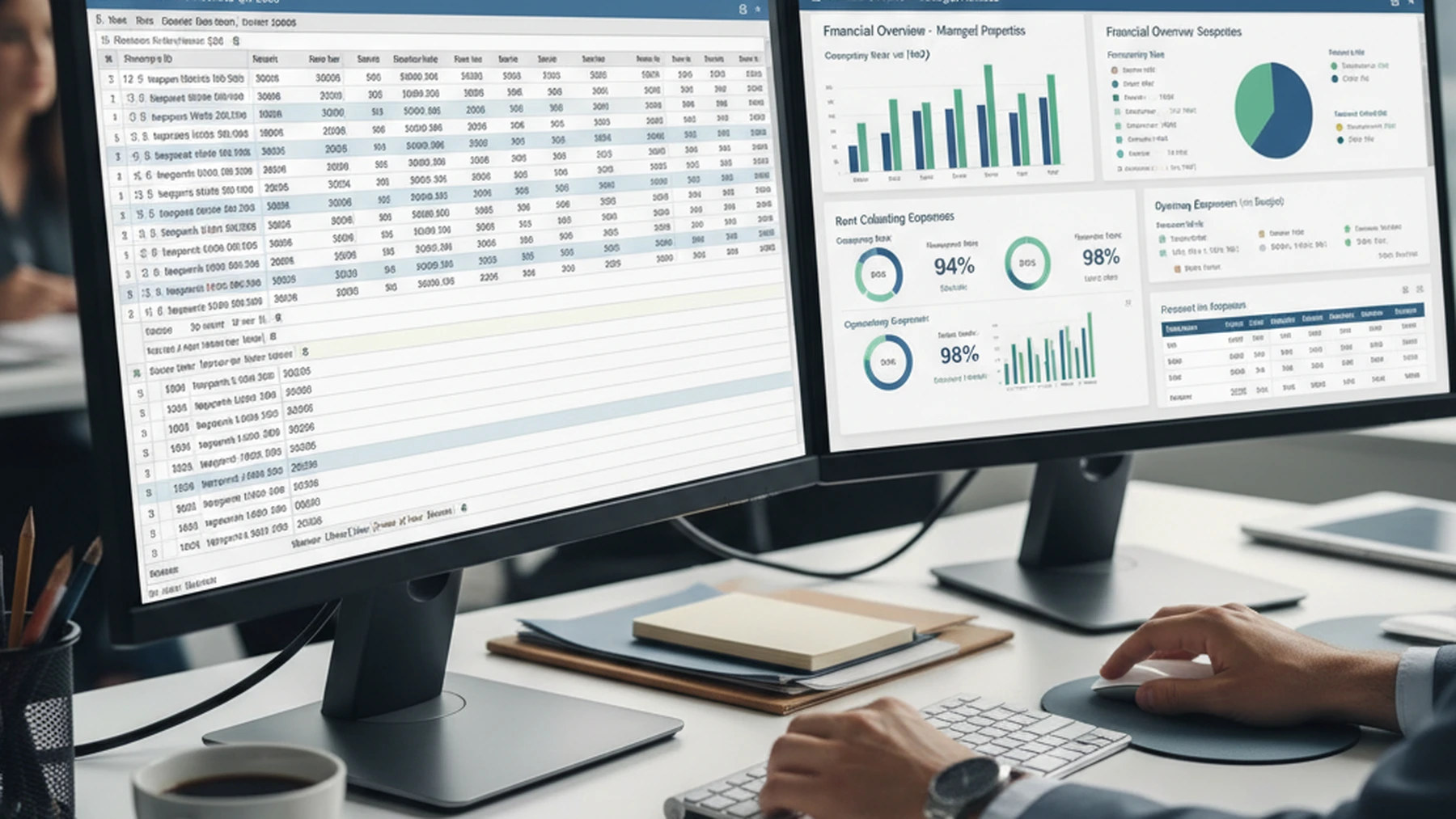
The accounting architecture in MRI is built around a multi-entity, multi-property general ledger. Each property exists as its own accounting entity, but all entities roll up into consolidated portfolio reporting with a single set of controls.
This structure matters for property managers with 10+ assets. Managing separate QuickBooks files for each property creates reconciliation problems, version control issues, and reporting delays. MRI consolidates everything while maintaining clean entity separation for tax and legal purposes.
Chart of Accounts Flexibility
MRI allows full customization of the chart of accounts. Property managers can standardize account codes across a portfolio or maintain property-specific structures where needed. REA's property accountants typically recommend a standardized COA as a best practice, because it enables clean portfolio-level aggregation and makes audit preparation significantly faster.
Automated Bank Reconciliation
MRI connects directly to bank feeds and automates the matching of transactions to posted entries. Exception-based review means property managers only need to manually review items that don't match automatically, which is a fraction of total transaction volume on a clean portfolio.
Audit-Ready Financial Packages
MRI's document storage and transaction history create a clean audit trail by default. Every accounting entry records the user, timestamp, and source document. Property managers preparing for lender audits, year-end tax reviews, or investor due diligence can produce financial packages directly from MRI rather than assembling records from multiple systems.
Who MRI Software Is Best For
MRI is not the right fit for every operator. It is designed for scale, and its full capabilities are most valuable for:
Commercial real estate operators managing office, retail, or industrial portfolios where lease complexity, CAM reconciliations, and multi-tenant accounting are daily requirements.
Large residential portfolio operators with 500+ units where lease management automation, consolidated reporting, and multi-entity accounting structures justify the platform investment.
Mixed-use and diversified portfolios that include commercial property alongside residential assets and need a single platform for accounting and reporting across both.
Public housing authorities and affordable housing operators that need HUD compliance reporting and income certification workflows alongside standard property management tools.
Institutional investors and REIT operators who need investor-grade reporting, joint venture accounting, and portfolio-level analytics for capital partners.
Property managers running smaller portfolios, or those focused primarily on single-family or small residential assets, often find that MRI's depth exceeds their requirements. Platforms like AppFolio or Yardi may be better fits at lower asset counts before the complexity of commercial real estate or large residential operations makes MRI the logical choice.
How REA Maximizes MRI for Property Managers
Owning MRI is not the same as using it well. The platform has significant depth, and most property management teams are not accounting specialists. That gap between platform capability and team capacity is exactly where REA operates.
REA is a dedicated real estate accounting firm with 230+ property accountants, all of them specialists in property management accounting. The firm manages accounting for portfolios covering 130,000+ residential units and 30 million+ square feet of commercial real estate. Clients see an average cost savings of 30%+ compared to building equivalent in-house accounting capacity.
For MRI-specific work, REA's MRI accounting services cover:
MRI Implementation and Chart of Accounts Setup
Getting the chart of accounts and entity structure right at setup determines how clean the accounting will be for years. REA's property accountants build MRI account structures to support both property-level management and portfolio-level reporting from day one, without requiring painful restructuring later.
Ongoing Accounting Operations
REA handles monthly close, bank reconciliations, accounts payable processing, CAM reconciliation, and financial reporting inside MRI on behalf of property managers. The team works directly inside the client's MRI environment, so property managers see current, accurate financials without managing an accounting staff.
Audit Preparation and Investor Reporting
When auditors or lenders request financial packages, REA's meticulous documentation standards mean the work is already done. MRI's audit trail combined with REA's organized workflows produces clean financial packages without emergency scrambles.
Lease Abstraction and Lease Management Support
REA's team handles lease abstraction, data entry into MRI's lease management module, and ongoing lease administration. For commercial real estate portfolios with complex lease structures, this keeps the lease management data accurate and current without pulling property manager time away from operations.
The result: property managers focus on leasing, operations, and growth. REA handles the accounting infrastructure that keeps the portfolio audit ready and the books meticulous.
MRI vs. Other Property Management Accounting Platforms
MRI and Yardi compete most directly at the enterprise level. The key differentiator is often the open architecture of MRI, which makes third-party integrations and custom configurations more accessible. AppFolio serves a different market segment: it is faster to implement and better suited to residential portfolios before they reach commercial real estate complexity.
Frequently Asked Questions About MRI Software for Property Management
What does MRI software cost for property managers?
MRI Software does not publish standard pricing publicly. Licensing is negotiated based on portfolio size, modules selected, and contract terms. Enterprise deployments typically involve implementation fees alongside ongoing licensing costs. Property managers evaluating MRI should request a formal quote based on their specific portfolio and module requirements.
Is MRI software good for small property managers?
MRI is designed for mid-to-large portfolios with complex accounting and lease management requirements. Smaller operators with simple residential portfolios generally find the platform more than they need. The implementation cost and learning curve are sized for organizations that will use MRI's full feature set. Smaller operators are usually better served by AppFolio or similar platforms until portfolio complexity justifies the move.
How does MRI handle lease management for commercial leases?
MRI's lease management module handles all standard commercial lease structures: gross, net, modified gross, percentage rent, and ground leases. It tracks rent escalations, option periods, renewal notices, and tenant improvement allowances. CAM reconciliations are calculated within the platform using each tenant's proportionate share. The module also maintains ASC 842 compliance by calculating right-of-use assets and lease liabilities automatically.
Can MRI software handle public housing accounting?
Yes. MRI has purpose-built solutions for public housing authorities and affordable housing operators. The platform handles HUD compliance reporting, Housing Choice Voucher administration, and income certification workflows alongside standard property accounting. It is one of the few platforms that handles public housing compliance at scale without requiring extensive manual processes.
How does REA support property managers using MRI?
REA's property accountants work directly inside MRI to handle monthly close, CAM reconciliations, financial reporting, and audit preparation. The team is expert in MRI's accounting architecture and can handle everything from initial setup to ongoing operations. Property managers get accurate, meticulous financials without managing accounting staff or MRI specialists in-house. Click here to schedule time with us to discuss your portfolio.
The Bottom Line on MRI Software for Property Management
MRI is one of the most capable solutions in property management accounting, built specifically for the complexity of commercial real estate and large residential portfolios. Its lease management automation, multi-entity general ledger, and portfolio analytics are purpose-built for operators who are scaling beyond what simpler platforms can support.
The platform's depth is also its challenge: property managers who do not have expert accounting staff inside MRI leave significant value on the table. CAM reconciliations go unoptimized, chart of accounts structures create reporting problems, and audit preparation becomes a manual scramble.
REA's 230+ property accountants work inside MRI every day, across portfolios covering 130,000+ residential units and 30 million+ square feet of commercial real estate. Our team keeps your portfolio audit ready, your financials meticulous, and your attention focused on growing the business.
Click here to schedule time with us and see what expert MRI accounting support looks like for your portfolio.
Want this handled for you?
Schedule a Call