A 1031 exchange lets a real estate investor defer capital gains tax by selling one investment property and buying another, but the deferral only holds if the books are right. 1031 exchange bookkeeping means documenting the sale, exchange funds, and new purchase so your Real Estate Accounting team can defend it if the IRS asks.
By REA Team, Property Management Experts
What Is 1031 Exchange Bookkeeping and Why Does It Need Special Handling?
A 1031 exchange, named for section 1031 of the Internal Revenue Code, lets an investor sell a relinquished investment property and roll the proceeds into a replacement property without immediately paying capital gains tax. Ordinary bookkeeping records what happened. 1031 exchange bookkeeping has to record what happened, what the exchange deferred, and what basis carries forward, because that deferred gain becomes part of the new property's tax basis rather than disappearing.
The special handling comes from timing and control. Sale proceeds from the relinquished property never touch the seller's hands; they sit with a qualified intermediary until they're used to purchase the replacement property. Your books need entries that reflect funds held by a third party, not cash received, and a paper trail tight enough to survive an IRS review years later.
Documents Your Accountant Needs Before the 45-Day Identification Deadline
The 45-day identification window starts the day the relinquished property closes, and there's no extension for a bookkeeper who's still hunting for paperwork. Before that clock runs out, your accountant needs:
- The closing statement (HUD-1 or ALTA settlement statement) from the sale of the relinquished property
- The qualified intermediary exchange agreement, showing how proceeds are held
- A current depreciation schedule for the relinquished property, so accumulated depreciation carries forward correctly
- Any outstanding mortgage payoff statements
- The written identification of the replacement property or properties, sent to the qualified intermediary within the 45 days
Gathering these after the deadline doesn't help; the IRS cares that the identification was made in writing, signed, and delivered to the intermediary inside the window. A bookkeeper working from bank statements alone will usually miss the depreciation schedule and the intermediary agreement, both of which the accountant needs to set up the exchange correctly in the ledger.
Recording a 1031 Exchange in Your Accounting Software
Most property accounting software, including QuickBooks, AppFolio, and Yardi, treats a property sale as a straightforward disposal with a gain or loss hitting the income statement. A 1031 exchange breaks that default.

Instead of posting a taxable gain, the exchange needs a deferred gain account that holds the amount not recognized for tax purposes. The relinquished property's asset and accumulated depreciation accounts get closed out, exchange costs (intermediary fees, closing costs) get capitalized rather than expensed, and the replacement property is set up as a new fixed asset with its cost basis calculated from the exchange, not from the purchase price alone. Getting this sequence wrong in the software is one of the most common reasons a 1031 exchange bookkeeping cleanup lands on an accountant's desk months later.
Calculating and Tracking Your New Cost Basis After the Exchange
The replacement property's cost basis is not its purchase price. It starts with the relinquished property's adjusted basis (original cost, plus improvements, minus accumulated depreciation), then adds any cash paid above the sale proceeds and subtracts any boot received. Getting this number wrong understates or overstates depreciation for the life of the new property, an error that compounds every year until the IRS or a new accountant catches it.
Before the purchase closes, it helps to run a full due diligence checklist before purchase against the replacement property; a mismatch between the closing statement and what was identified inside the 45-day window is one of the fastest ways a basis calculation goes wrong, since the accountant is working from whatever numbers the closing documents actually show.
Accounting for Boot Received in a 1031 Exchange
Boot is any value received in the exchange that isn't like-kind real property: cash back from the exchange, debt relief when the replacement property carries a smaller mortgage than the one paid off, or personal property thrown in as part of the deal. Boot is taxable in the year of the exchange, even though the rest of the gain is deferred.
Bookkeeping has to separate boot from the deferred portion of the gain at the transaction level, not estimate it later. Cash boot shows up as a distribution from the qualified intermediary's account; mortgage boot shows up as the difference between the old and new loan balances on the closing statements. Both need their own line so the accountant can report the taxable portion accurately on the return, since a 1031 exchange bookkeeping error here is what turns a routine exchange into an audit flag.
Journal Entries to Close the Relinquished Property and Open the Replacement
Closing out the relinquished property means debiting accumulated depreciation, crediting the asset account at its original cost, and moving any exchange costs into a clearing account tied to the qualified intermediary until the replacement property closes. The deferred gain gets credited to a deferred gain liability account rather than recognized as income.
Opening the replacement property means debiting a new fixed asset account for the calculated cost basis, crediting the clearing account to zero it out, and recording any boot as a separate gain recognized in the current period. Before posting the final entries, cross-checking rent roll accuracy before closing on the replacement property catches unit-count or income discrepancies that would otherwise throw off the allocation of purchase price between land, building, and personal property, an allocation that directly drives the new depreciation schedule.
How a 1031 Exchange Changes Your Depreciation Schedule
The replacement property doesn't start a fresh depreciation clock. IRS rules require carrying over the remaining depreciable basis and recovery period from the relinquished property for the exchanged portion, then depreciating any additional basis (cash or debt paid above the exchange value) as a separate, newly placed-in-service asset on its own schedule. Most accounting software won't split this automatically; it has to be set up as two linked depreciation schedules on the same asset.
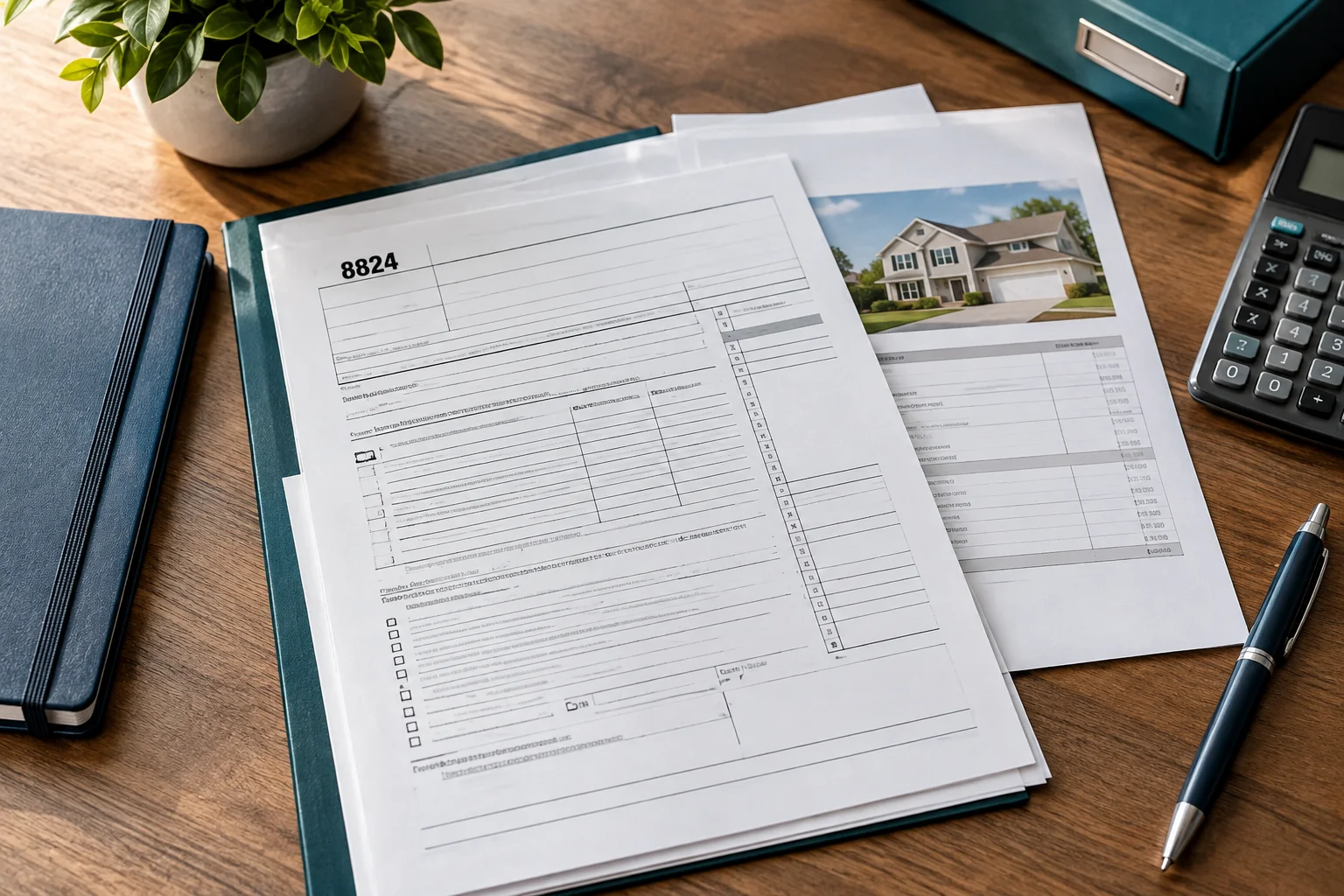
This is also where the exchange shows up on the tax return: Form 8824 reports the exchange, the realized and recognized gain, and the resulting basis, and it has to reconcile with whatever the books say the new asset is worth. Coordinating that reconciliation for your investment property is exactly the kind of work our Income Tax Services team handles alongside the bookkeeping side of a 1031 exchange.
Frequently Asked Questions
Can my regular bookkeeper handle a 1031 exchange, or do I need a specialist? A general bookkeeper can usually handle the day-to-day entries for your rental business once the exchange is set up, but the setup itself, deferred gain accounts, basis carryover, and boot allocation, usually benefits from someone who has handled a 1031 exchange before. Many owners bring in a specialist for the exchange quarter, then hand routine entries back afterward.
What happens if my books aren't ready before the 45-day deadline? The 45-day deadline is about identifying the replacement property, not about your books. But if your accountant doesn't have the closing statement and depreciation schedule from the relinquished property in hand, the accounting setup, deferred gain, basis, and journal entries, can still get rushed or delayed, which raises the odds of an error the IRS could challenge later.
Do I still need to report a 1031 exchange on my tax return if no cash changed hands? Yes. Even a fully deferred exchange with no boot and no cash received still gets reported on Form 8824 with the return for the year of the exchange. Skipping the filing because no gain was recognized is a common mistake that can undermine the deferral itself if the IRS later questions the election.
How long should I keep 1031 exchange bookkeeping records? Most accountants recommend keeping the exchange agreement, closing statements, identification notice, and resulting basis calculation for as long as you own the replacement property, plus several years after you eventually sell it, since the deferred gain and carried-over basis stay relevant to every future sale or exchange.
What's the difference between the qualified intermediary's role and my accountant's role? The qualified intermediary holds the sale proceeds, prepares the exchange agreement, and ensures the transaction qualifies under section 1031 so you never have actual or constructive receipt of the funds. Your accountant records the transaction, calculates the new basis, sets up the depreciation schedules, and makes sure the exchange is reported correctly on your return.
Get Your Books Ready Before the Clock Starts
1031 exchange bookkeeping goes smoother when your accountant is looped in before the relinquished property closes, not after the 45-day clock has already started. Lets Connect and we'll walk through what your books need before your next exchange.
Want this handled for you?
Schedule a Call