
REA Newsletter 1.17.24
US FTC, Colorado sue property firm Greystar, alleging renters deceived by hidden fees
Cities Are Cracking Down on Short-Term Rentals. Here's How

Cities around the world are imposing stricter rules for short-term rentals offered as vacation properties by the likes of Airbnb and Vrbo. Short-term bookings, often defined as stays shorter than a month, reduce the supply of long-term rentals in local markets and are frequently blamed for exacerbating housing shortages, inflating rents and threatening hospitality jobs.
Barcelona pledged an outright ban on short-term rentals in June, in one of the most aggressive policies so far. It had already forbidden the rental of private rooms within homes.
Here's why and how regulators are cracking down on Airbnb and Vrbo listings.
Why are cities regulating short-term rentals?
Many city governments see short-term rentals as an obstacle to affordable housing. When a large swath of the local housing supply is carved out for tourists, there's less inventory for full-time residents. The New York City comptroller's office found that roughly 9.2% of the rent increases imposed by landlords from 2009 to 2016 were attributable to the effect of Airbnb alone.
Local opponents of the short-term rental business say it encourages real estate companies and wealthy investors to buy up multiple properties, sometimes making up the bulk of units in one building, and convert them into de facto hotels. In most tourist destinations, owners can earn more by renting to splurging travelers for a few nights at a time rather than leasing to budget-conscious tenants for a year or two.
Miami, a city where dedicated vacation condo towers are being built, offers an example. Airbnb and Vrbo listings there earn an average of $309 per night, according to AirDNA, a rental analytics firm, while long-term rentals bring in about $109 per night. So it would take only 11 days of short-term rentals to exceed a full month's rent in a long-term lease.
In Barcelona, which has more than 10,000 vacation-property listings registered with the city, rents have soared 68% in the last decade, in part because high interest rates are pushing more would-be homeowners into the rental market and also because of reduced rental inventory.
2025 Interest Rate Outlook (and How CRE is Impacted)
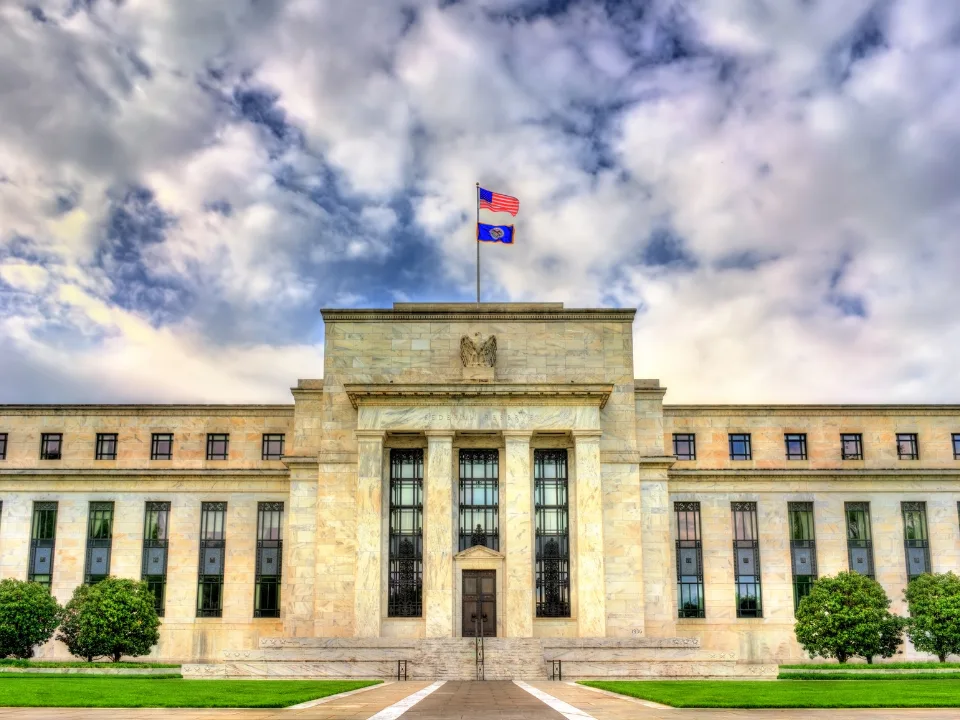
As the US heads into 2025, the Federal Reserve's approach to interest rates for the year remains a critical factor for commercial real estate professionals.
With that said, US interest rates are likely to remain elevated in 2025, with a target federal funds rate projected at 3.9% by late 2025, according to Commercial Observer.
By The Numbers
With inflation cooling significantly from a 41-year high of 9.1% in mid-2022 to nearly 3% by late 2024, the Fed has begun cutting the federal funds rate after many years of higher-than-average rates.
The current rate now sits between 4.25% and 4.5%, down from the 5.25%-5.5% range maintained from mid-2023 to late 2024. On Dec. 18th, Jerome Powell indicated more cuts are likely, with the target federal funds rate expected to drop to 3.9% by late 2025.
However, inflation continues to hover above the Fed's 2% target. As Jed Resnick, CEO of Douglaston Development, notes, while inflation has cooled slightly, "the Fed's job is to carefully control inflation," and they appear to have avoided a recession while managing the markets.
Despite Powell's optimistic outlook, not all experts are convinced rate cuts are entirely warranted. Critics question whether the Fed should continue cutting rates when certain inflation metrics, like the Producer Price Index (PPI), are still rising.
George Tietjen, managing director at Sentinel Real Estate, suggests that the Fed might be rushing to ease rates too quickly, noting that inflation has not yet hit the 2% target. With inflation still a concern, some Fed officials appear hesitant to further loosen monetary policy.
The Real Benchmark
While the Fed's primary focus is the short-term federal funds rate, long-term interest rates, specifically the 10-year Treasury, also play a pivotal role in the CRE market.
Conventional wisdom suggests that once inflation begins to subside, the 10-year Treasury should follow suit, but this hasn't been the case this time around. Since Powell's first rate cut in September 2024, the 10-year Treasury yield has risen from 3.6% to 4.6% by late December, defying expectations.
As Stuart Boesky, CEO of Pembrook Capital Management, explains, long-term interest rates reflect future inflation expectations, and market uncertainty about the economy has kept yields higher despite short-term cuts.
The 10-year Treasury yield, a key reference point for CRE loans, has risen in response to inflation concerns, contributing to higher borrowing costs for developers and investors.
19 Real Estate Investment Trends To Watch In 2025

For real estate professionals, keeping up with current trends is vital in a constantly evolving market. Between sustainability, portfolio diversification and the expansion of technology like AI and virtual reality, making wise real estate investment decisions today requires thorough knowledge of the opportunities and challenges on the horizon.
Below, 19 Forbes Business Council members each share one real estate investing trend likely to emerge in 2025, as well as the potential impact each trend will have on investors.
1. Increased Spending On New And Existing Properties
Real estate investors are indicating a stronger growth mindset for 2025, with plans to increase spending on both existing and new properties while diversifying their portfolios. There is notable interest in renovation projects and expansion geographically and by property type. These trends are expected to support the growth of rental property businesses and facilitate expansion into new markets., R
2. More Demand For Flexible Spaces
In 2025, real estate trends will be shaped by hybrid work, leading to demand for flexible spaces in prime locations while balancing accessibility and remote work needs. Sustainability will be critical as more investors and tenants prioritize eco-friendly, durable properties. This means buildings are being increasingly evaluated on emissions and resilience to floods and extreme weather., Beate van Loo-Born, PhysikInstrumente (PI)
3. A Shift Away From High-Risk Areas
In 2025, there will be an uptick in investors systematically moving away from high-risk areas due to insurance exposure and rental cancellations. This may include the Southeast with increased hurricane risk or the Northwest with heightened wildfire risk. This will open up opportunities for investors who have more risk tolerance and may offer even greater opportunities for first-time homebuyers in these areas., Nathan Miller, Rentec Direct
4. Second-Tier Market Investments
Housing demand will remain high, perhaps too high for opportunity investors. I recommend searching for and securing undersupplied markets that would normally be considered second-tier. Invest in markets with accessible healthcare and advanced educational attainment. Think small-town Midwest and inter-mountain West., Henry Delozier, GGA Partners
5. AI-Driven Property Analyzes
In 2025, AI-driven property analyzes will dominate real estate investing, leveraging predictive analytics to identify high-yield opportunities. This trend will empower investors with precise market insights, reduce risks and enable faster decision making. However, it may also increase competition, raising property prices in data-highlighted hotspot and challenging investors to adapt swiftly., Shehar Yar, Software House
The Growing Role of AI in Property Management in 2025

Property management is changing. As we get closer to 2025, one important factor is coming into play: artificial intelligence (AI).
AI is no longer a futuristic concept. It's here, transforming industries, including real estate.
In property management, AI is becoming a game-changer. It's automating routine tasks, enhancing tenant screening, and even assisting in the eviction process.
This is a chance to make things run smoother, build better relationships with tenants, and follow the law.
This article will look at the increasing use of AI in property management. We will discuss how AI can assist you with the challenges of eviction and improve landlord-tenant relationships. Join us as we explore the future of property management in 2025.
Understanding AI in Property Management
AI in property management uses smart systems to automate tasks and help make better decisions. This can include basic automation as well as more advanced data analysis.
Property managers can utilize AI for a variety of purposes. Some of the key applications include:
- Predictive maintenance
- Tenant screening
- Lease management
- Pricing strategies
AI makes predictive maintenance easier by predicting when equipment might fail. This helps to reduce downtime and lower repair costs.
Using AI in tenant screening is helpful. It analyzes a lot of data to make sure only the best candidates are chosen.
Managing leases is easier with AI-driven platforms. Automating paperwork cuts down on mistakes and boosts efficiency.
Additionally, AI improves pricing strategies. It looks at market trends and competitor prices to determine flexible rental rates.
By understanding what AI can do, property managers can work more efficiently. This knowledge is important for staying competitive in the market.
The Basics of AI and Its Application in Real Estate
AI, or artificial intelligence, mimics human intelligence through machines. In real estate, it's being applied more frequently.
At its core, AI handles repetitive and data-intensive tasks. It's capable of complex problem-solving and making predictions.
In property management, AI collects and examines large amounts of data. This helps property managers make better decisions.
AI automates daily tasks, saving time for more important work. This allows property managers to focus on key areas and improves overall operations.
Commercial real estate is still on thin ice heading into 2025, but investors see best entry point in 15 years

In our State of REIT Nation report, we analyze the recently released NAREIT T-Tracker data. Earlier this month, we published our REIT Earnings Recap which analyzed Q3 results on a company-by-company level, but this report will focus on higher-level macro themes affecting the REIT sector at large.
Rates Up, REITs Down, Again. Two years of persistent rate-driven pressure on commercial and residential real estate markets appeared to be easing in mid-2024 as the Federal Reserve pivoted from aggressive rate-hiking to an easing cycle, but recent firming of inflation and buoyant economic momentum has again muddied the outlook. Real estate markets were an easy transmission mechanism of the Fed's historically swift monetary tightening cycle that began in March 2022, which resulted in the largest increase in the Federal Funds rate in any two-year period since 1981 on an absolute basis and the single-most significant increase on a percentage basis. Concern about real estate is warranted given that the two prior rate hike cycles that exceeded 400 basis points, the late 1980s cycle that sparked the Savings & Loan Crisis and the mid-2000s cycle that sparked the Great Financial Crisis, resulted in significant distress and disruption within in the real estate industry. This concern has resulted in a nearly one-to-one correlation between REIT valuations and benchmark long-term interest rates, and has resulted in a roughly 45 percentage-point underperformance versus the S&P 500.
One of several "false starts" over the past year, REITs surged 20% leading up to the Fed's initial "jumbo" interest rate cut in September, but have hit the skids once again since the rate-cutting cycle actually began. The Vanguard Real Estate ETF (VNQ -0.07%) has slumped -5% since that initial 50 basis point rate cut despite another 25 basis points in subsequent meetings, during which time the S&P 500 (SPY +1%) has gained roughly 8%. The cumulative 45-percentage point performance gap between REITs and the broader equity market is remarkable, given the historical performance correlations between the two: on a 15, 20, 25, and 30-year basis, REITs and the S&P 500 have delivered annualized total returns that are within about 3.5 percentage points. The renewed pressure on REITs comes alongside a rebound in the 10-Year Treasury Yield to around 4.50%, which now sits 75-basis points above the levels seen immediately before the Fed's September rate cut, resulting from a series of firmer inflation reports, indications of buoyant domestic economic growth, and the "Trump trade" effects, reflecting expectations of accelerating nominal growth alongside concerns over an uptick in inflationary pressures. For context, the 21st-century average on the 10-Year Yield is roughly 3.0%.
Want this handled for you?
Schedule a Call