Table of Contents
- CAM Reconciliations, NNN, and Modified Gross Lease Accounting
- Common Area Maintenance (CAM) Reconciliations
- NNN vs. Modified Gross Leases
- Percentage Rent, Base Year Accounting, and Property Tax Appeals
- Percentage Rent for Retail Tenants
- Base Year and Expense Stop Accounting
- San Diego Commercial Property Tax Assessments and Appeals
- Why San Diego Property Teams Trust REA
- Frequently Asked Questions
- Start Your San Diego Commercial Accounting Engagement
Commercial real estate accounting in San Diego means reconciling CAM charges, tracking NNN and modified gross escalations, and closing books accurately across office, retail, and industrial portfolios. For landlords managing Commercial Real Estate assets in a fast growing coastal market, precise books protect margin and satisfy lenders, partners, and tax authorities alike.
By REA Team, Property Management Experts
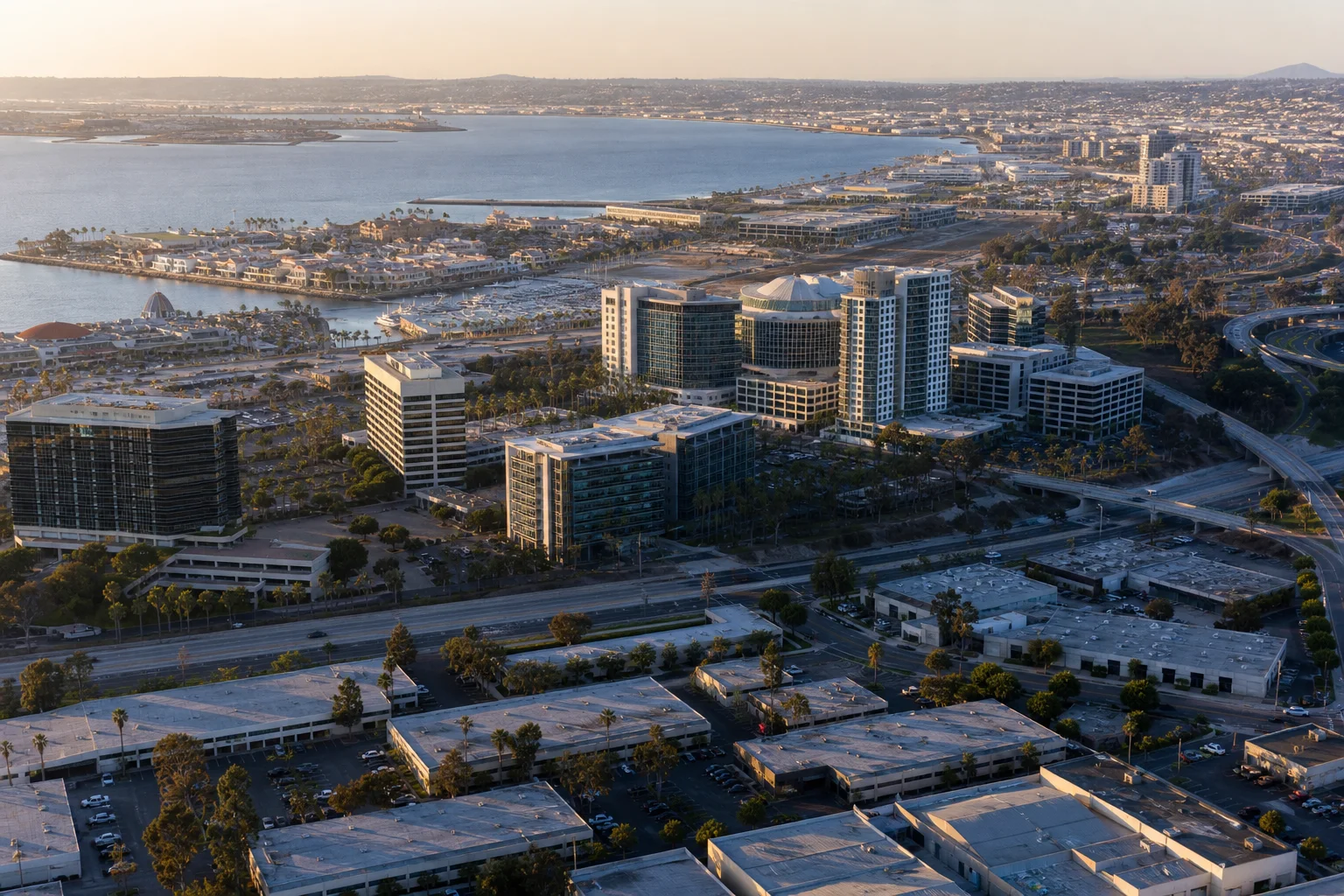
San Diego's commercial market spans downtown high-rise office towers, harborfront retail centers, and industrial office parks stretching from Otay Mesa to Kearny Mesa, and each of these properties carries its own accounting rules. Getting them wrong shows up fast in an owner's distribution or a lender's covenant review.
For many landlords, San Diego is home to some of the most active office, retail, and industrial markets on the West Coast, and the pace of leasing activity here means books have to stay current, not just accurate at year end. A property management company handling a single-tenant industrial building runs a very different set of calculations than a team overseeing Property Management for a multi-tenant retail center with common area obligations split a dozen ways.
REA's accountants combine real estate accounting discipline with hands-on local market knowledge of San Diego leasing conventions, so owners get numbers that hold up under audit, not just numbers that close on time. Many owners in this market lean on outsourced real estate accounting to keep that discipline consistent as a portfolio grows, without adding in-house headcount.
CAM Reconciliations, NNN, and Modified Gross Lease Accounting
Common Area Maintenance (CAM) Reconciliations
CAM reconciliation is where most San Diego commercial disputes start. Landlords pass through a share of common area maintenance, insurance, and property tax to tenants based on their proportionate share of the building, then true up estimated payments against actual costs once a year. A clean reconciliation lays out gross operating expense, exclusions, the tenant's pro rata share, and the resulting credit or bill, with supporting detail a tenant's broker or auditor can trace line by line.
Errors here are rarely malicious. They come from missing an expense-cap clause, misapplying an escalation, or mixing capital costs into an operating pass-through. San Diego's older office and retail stock, much of it built before current lease templates became standard, tends to carry a wider mix of custom CAM clauses than newer industrial construction, which makes reconciliation more manual and more error prone without a disciplined process.
NNN vs. Modified Gross Leases
Triple net (NNN) leases push property tax, insurance, and CAM directly to the tenant, on top of base rent. Modified gross leases split the load differently, often with the landlord absorbing certain expenses up to an agreed base year figure and passing through amounts above that. Industrial properties in San Diego lean heavily NNN, while a portion of office and mixed use product still runs on modified gross or full-service structures, especially in older buildings where tenants expect a simpler bill.
Getting the lease type coded correctly in the accounting system at move-in, not renegotiated after a dispute, is the single biggest driver of clean CAM output. This is also where software choice matters. Firms running Yardi, AppFolio, or MRI Software can automate much of the escalation math once lease terms are abstracted correctly, which is why accurate lease abstraction services at the front end save hours of reconciliation work later.

Percentage Rent, Base Year Accounting, and Property Tax Appeals
Percentage Rent for Retail Tenants
Retail leases in San Diego's more active shopping corridors frequently include a percentage rent clause, where a tenant pays a share of gross sales above a negotiated breakpoint in addition to base rent. Tracking this correctly means collecting monthly or annual sales reports from tenants, verifying them against lease terms, and posting the overage on the schedule the lease requires. Owners who skip a formal sales-verification step often leave revenue on the table without realizing it.
Base Year and Expense Stop Accounting
Base year accounting sets a benchmark year of operating expenses that a tenant's rent already covers, then bills the tenant only for increases above that benchmark in later years. An expense stop works similarly but is expressed as a fixed dollar figure per square foot rather than an actual base year. Both require careful documentation, since a base year set incorrectly at lease signing can under-recover or over-bill a tenant for the life of the term.
San Diego Commercial Property Tax Assessments and Appeals
San Diego County reassesses commercial property value primarily on a change in ownership or new construction, under California's Proposition 13 framework, and that reassessed value drives the property tax line that gets passed through to NNN tenants. When an assessment looks out of step with market value, owners have a formal window to file an appeal with the county assessment appeals board, supported by income approach or comparable sales evidence. Because that tax line flows straight into CAM billing, a successful appeal, or a missed deadline to file one, shows up directly in tenant reconciliations the following year.
Why San Diego Property Teams Trust REA
Property owners rarely need convincing that commercial real estate accounting in San Diego is different from residential bookkeeping. What they need is a team that has actually run CAM reconciliations, base year calculations, and appeal-driven adjustments across this local market, not a generalist bookkeeper learning the rules on their file.
REA is an active member of the San Diego commercial real estate community, and that local knowledge shows up in the advice owners get on lease negotiations, expense classification, and reporting cadence. San Diego remains one of the fastest growing industrial and office markets on the West Coast, and the investments landlords make in accurate books now pay off when it is time to refinance, sell, or bring in new capital partners. REA follows best practices for lease abstraction and CAM tracking across every San Diego engagement, and reporting is built for leasing sales teams and ownership groups alike, not just outside auditors.
REA's team can offer a complete range of accounting, tax, and reporting services in-house, whether a portfolio runs on Buildium, Rent Manager, Entrata, QuickBooks, or another major platform. That platform flexibility, paired with income tax services built for real estate ownership structures, is why many companies managing multi-property portfolios in and beyond San Diego, from Chicago to Portland, Oregon, consolidate their books with a single outsourced accounting team instead of piecing the work out property by property. Keeping a consistent multi-market chart of accounts is what lets that consolidated reporting stay comparable from building to building, no matter which market a property sits in.
Staying ahead of local commercial real estate news and market trends also means watching how comparable markets evolve. Benchmarking a property's numbers against similar assets, rather than only against last year's results, tends to surface issues that a single year of internal comparison would miss. Tightening the monthly close usually comes down to automating the repetitive parts of the process, like escalation calculations and CAM tracking, so the team spends its time reviewing exceptions instead of reentering data.
Frequently Asked Questions
What makes commercial real estate accounting in San Diego different from other markets? San Diego's mix of older office and retail stock with custom CAM clauses, alongside newer industrial development on more standardized NNN terms, means a bookkeeper has to track two very different sets of lease conventions inside one portfolio. Add California's Proposition 13 reassessment rules and a formal county appeals process, and local knowledge becomes essential to getting the numbers right.
How often should CAM reconciliations happen? Most San Diego commercial leases call for an annual CAM reconciliation, comparing estimated monthly payments against actual expenses for the year, with a true-up bill or credit issued afterward. Some larger office and retail leases also require quarterly estimate reviews so tenants are not surprised by a large true-up at year end.
Can REA work with our existing property management software? Yes. REA's team works across the major platforms property managers already use, including Yardi, AppFolio, Buildium, Rent Manager, Entrata, and QuickBooks, so a switch in accounting partner does not require a switch in software. Lease terms, CAM schedules, and general ledger detail move over during onboarding, and reporting continues on the same cadence owners are already used to seeing each month.
Does REA handle property tax appeal support? REA does not file the appeal itself, but supports the process by providing clean income and expense documentation, CAM detail, and comparable data that an owner's tax counsel or appraiser needs to build the case in front of the county assessment appeals board.
What size portfolios does REA typically support in San Diego? REA works with San Diego landlords ranging from single commercial buildings to multi-property portfolios spanning office, retail, and industrial assets, scaling reporting and staffing to the complexity of each portfolio rather than a one-size approach. Whether a client owns one retail center or a mixed portfolio of office, retail, and industrial properties across the county, the same disciplined CAM and lease accounting process applies at every size.
Start Your San Diego Commercial Accounting Engagement
If CAM reconciliations, lease escalations, or a pending assessment appeal are eating into your team's time, REA's San Diego accountants can take that work off your plate. Lets Connect to talk through your portfolio.
Want this handled for you?
Schedule a Call