
Missing a single renewal deadline can cost a landlord an anchor tenant or cost a tenant a location the business depends on. Critical date tracking from lease abstraction is the process that catches those deadlines before they pass, turning dense lease language into a structured calendar of dates, notices, and obligations through Lease Abstraction Services.
By REA Team, Property Management Experts

What Critical Date Tracking From Lease Abstraction Actually Involves
Critical date tracking from lease abstraction starts with a full read of a commercial real estate lease agreement by someone trained to find the dates that matter, not just the dates that are obvious. Lease abstraction pulls rent, square footage, and party names out of a lease document, but a good abstract also captures every deadline tied to a right, an obligation, or a penalty. Those extracted dates become the source for lease administration: the ongoing work of monitoring lease terms, sending notices on time, and keeping a lease agreement's obligations from becoming a surprise. Without abstraction, a property manager is tracking dates from memory or from a lease sitting in a shared drive, which is where renewal options and expiration dates start slipping through.
The Critical Dates a Lease Abstract Should Capture Beyond Renewal and Expiration
Renewal options and expiration dates are the two dates everyone expects an abstract to catch, but a thorough abstract goes further. It should flag rent escalation dates, the day CAM or operating expense reconciliations are due, insurance certificate renewal dates, estoppel and subordination deadlines, and any option to expand or contract space. It should also capture co-tenancy requirements, since a co-tenancy failure can trigger rent reduction or termination rights on its own timeline. For a Commercial Real Estate portfolio with dozens of leases, each with its own set of lease obligations, this level of detail is what turns a filing cabinet of documents into a usable dataset.
How Renewal Deadlines and Notice Windows Get Missed Without Abstraction
Most missed deadlines are not caused by a bad lease. They are caused by a notice window that nobody wrote down anywhere a human would see it again. A renewal option might require written notice 180 days before expiration, sent by a specific method, to a specific address. If that requirement lives only in paragraph 34 of a 60-page lease document, it depends on someone remembering to reread the lease months in advance. Staff turnover makes this worse: the person who signed the lease and knew its quirks moves on, and the next property manager inherits a stack of lease agreements with no record of which dates still matter. A structured abstract removes that dependency on institutional memory.
Kick-Out Clauses: What They Are and How Tracking Prevents Losing the Space
A kick-out clause gives one party the right to terminate a lease early if a defined condition is not met by a defined date, most often a sales threshold for a retail tenant or a co-tenancy requirement for a shopping center. Either side can hold this right depending on how the lease agreement was negotiated: a tenant might be able to exit if sales fall short after an initial trial period, while a landlord might be able to reclaim space if a tenant never opens for business. The clause usually comes with its own notice window and a cure period before the right can be exercised. Because a kick-out date does not resemble a typical expiration date, it is one of the dates most likely to be missed if it is not pulled out during abstraction and tracked on its own timeline.
The Dates That Carry the Highest Financial Risk If Missed
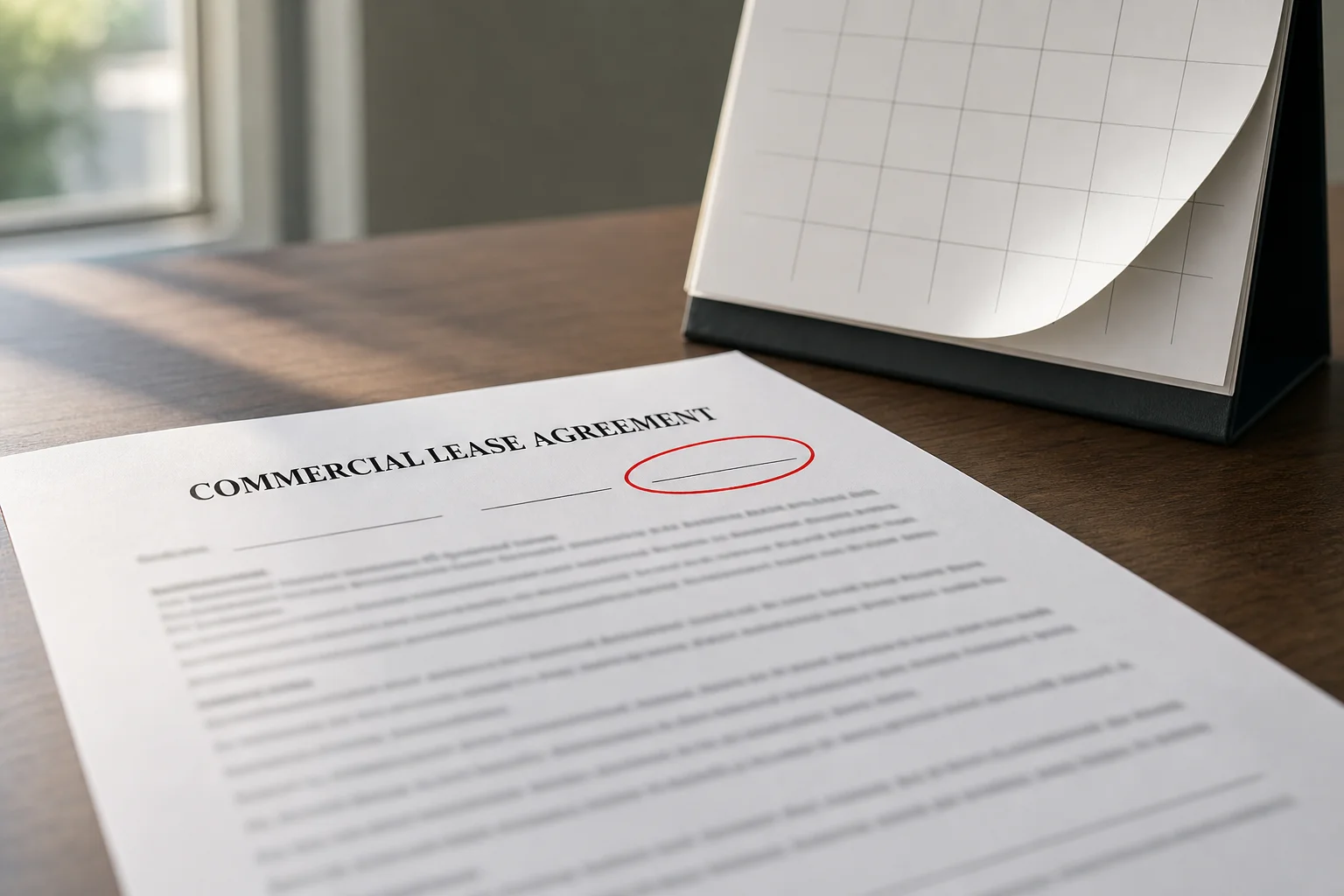
Not every date in a lease abstract carries equal weight. Renewal option deadlines carry outsized risk because missing one can convert a below-market lease into a month-to-month tenancy or force a costly relocation. Kick-out windows carry similar risk in reverse, a missed notice can lock a tenant into underperforming space for years. Rent escalation dates matter less dramatically but compound over a long lease term, and a missed escalation can mean months of underbilled rent that is difficult to recover retroactively. Expiration dates without a renewal plan in place are the highest-risk date of all, because a lease that lapses without a decision leaves a real estate portfolio with an unplanned vacancy or an unplanned holdover.
How Often Critical Dates Should Be Audited After the Initial Abstraction
An abstract is only accurate as of the day it was produced. Leases get amended, assigned, and sublet, and each of those events can change a critical date or add a new one. As a general practice, critical dates should be reviewed at least annually, and re-verified any time a lease is amended, a space changes hands, or a property is acquired as part of a larger real estate transaction. Portfolios going through acquisition due diligence should treat critical date re-verification as a required step, not an optional one, since an inherited lease can carry a renewal option or a kick-out date that the new owner has no record of exercising or waiving.
Tools and Systems for Tracking Critical Dates From Lease Abstracts
The right system depends on portfolio size and how the abstracts were produced. A lease administration or lease management platform that stores abstracted data as structured fields, rather than as a scanned PDF, is what makes automated alerts possible: a renewal option, notice window, or expiration date gets flagged weeks or months ahead instead of being caught the week it happens. Property management platforms increasingly build this tracking in directly, but the alerts are only as good as the data behind them, which is why the abstraction step and the tracking step have to be treated as one process rather than two. Some owners keep abstraction in-house, others bring in a dedicated team, and the vendor selection questions that decision raises, accuracy standards, turnaround time, and how disputes over an ambiguous clause get resolved, matter as much as the tool the dates end up living in. Either way, a human review layer that checks extracted dates against the source document before they go live in the system is what keeps an automated tool from becoming a new source of missed dates.
Frequently Asked Questions
What happens if you miss a lease renewal option deadline? Missing a renewal option deadline usually means the option lapses, and the lease agreement reverts to whatever the base lease says happens next, often a month-to-month tenancy or an obligation to vacate. Some leases allow a landlord discretion to accept a late notice, but nothing requires it. The safest outcome depends on getting an accurate answer well before the notice window closes, not after.
What is the difference between a critical date and a key date in lease administration? The terms are often used the same way, but where a distinction is drawn, a key date usually refers to any date noted in a lease, while a critical date refers specifically to one tied to a deadline, right, or financial consequence if missed. The practical difference between lease abstraction versus lease administration matters here too: abstraction extracts the dates, administration is the ongoing discipline of acting on them.
How far in advance should renewal notice be sent to a landlord? There is no universal number, the lease itself sets the requirement, and notice windows commonly run anywhere from 60 days to a year before expiration depending on the size and type of the space. Larger anchor spaces and build-to-suit leases tend to carry longer windows. The only reliable way to know the correct number for a specific lease is to check what that lease's abstract says, not what is typical for the market.
Can a kick-out clause be exercised by either the landlord or the tenant? Yes, kick-out rights can run in either direction depending on how the clause was negotiated. A tenant kick-out is usually tied to a sales threshold or a co-tenancy failure, while a landlord kick-out is less common but can appear when a tenant needs to open by a certain date or maintain a minimum operating schedule. The abstract should note which party holds the right and its exact notice window.
How many critical dates does a typical commercial lease abstract contain? It varies by lease complexity, but a typical commercial lease abstract commonly captures a dozen or more distinct dates once renewal options, escalation dates, insurance and estoppel deadlines, and any kick-out or co-tenancy windows are counted individually rather than as one line item. A short, simple lease may have far fewer, a large anchor lease with multiple options can have several times that number.
Get Your Portfolio's Critical Dates Under Control
A missed renewal option or an unflagged kick-out date is rarely about a bad lease, it is about dates that never made it out of the document. Lets Connect to talk through what a lease abstract of your portfolio would catch.
Want this handled for you?
Schedule a Call