Table of Contents
- Real Estate Bookkeeping Challenges
- Complex Income Streams
- Expense Management Nightmares
- Asset and Liability Tracking
- Importance of Accurate Financial Records
- Technology and Expertise
- In-House vs. Outsourced Bookkeeping: Making the Right Choice
- The In-House Approach: Challenges and Considerations
- The Power of Outsourcing: Expertise and Efficiency
- Cost Considerations: Hidden Expenses vs. Streamlined Solutions
- Making the Right Choice for Your Business
- What Makes a Great Real Estate Bookkeeping Solution?
- Industry-Specific Expertise
- Cutting-Edge Technology Integration
- Scalability and Adaptability
- Compliance and Reporting Excellence
- Final Thoughts
Bookkeeping for real estate companies is a complex task that requires specialized knowledge and attention to detail. At REA, we understand the unique financial challenges faced by real estate businesses.
In this post, we'll explore how to choose the right bookkeeping solution for your real estate company, whether it's in-house or outsourced. We'll also discuss key factors to consider when making this important decision.
Real Estate Bookkeeping Challenges
Complex Income Streams
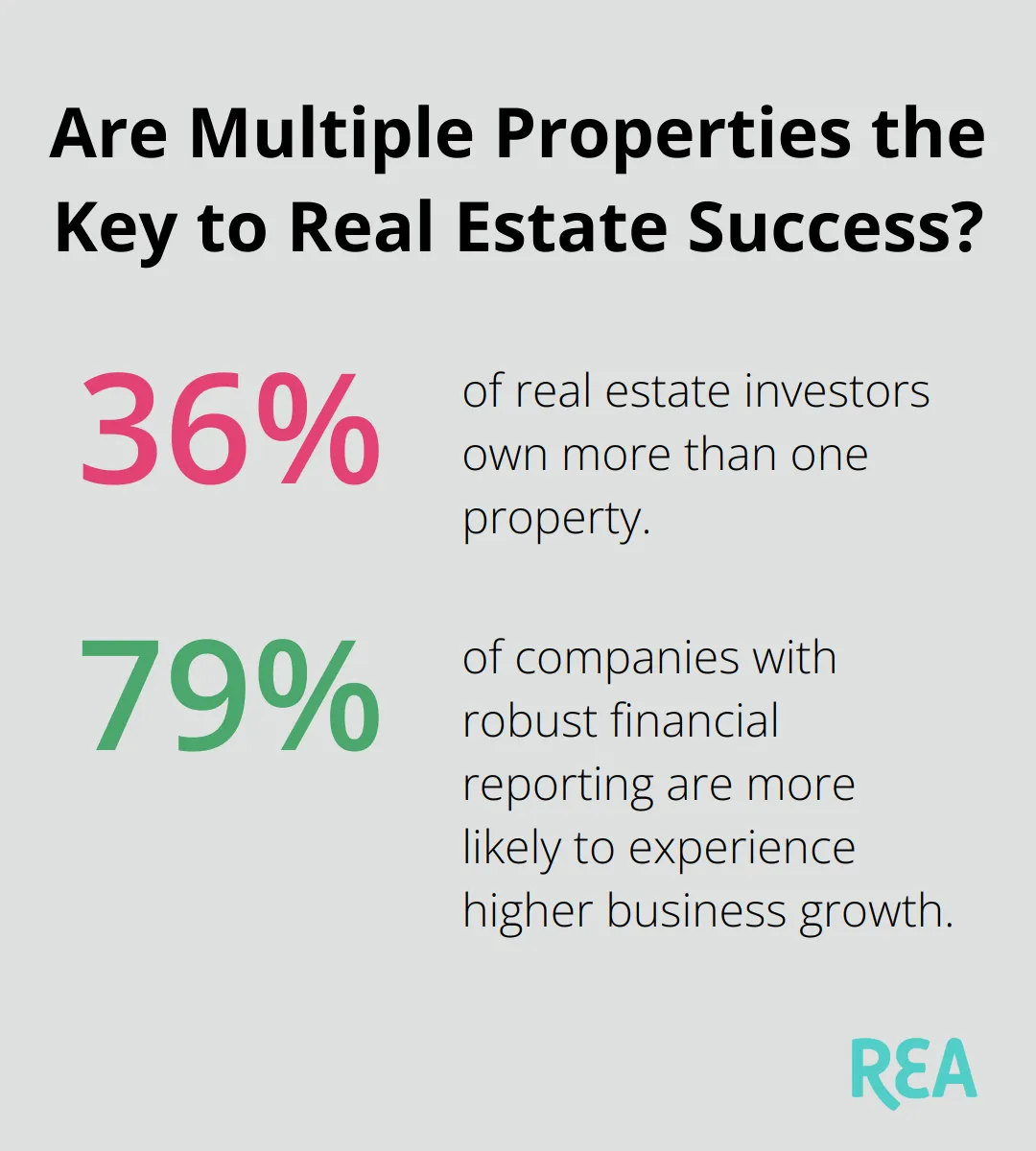
Real estate bookkeeping presents unique financial hurdles. Property managers and investors must track a myriad of transactions, from rental income to property maintenance expenses. Multiple income sources often create a tangled web of cash flow. The National Association of Realtors reports that 36% of real estate investors own more than one property, which amplifies the complexity of income tracking.
Expense Management Nightmares
Expense tracking in real estate proves equally challenging. Costs can quickly spiral from routine maintenance to unexpected repairs. The Building Owners and Managers Association (BOMA) states that operating expenses for office buildings average $8.60 per square foot annually. Without proper bookkeeping, these costs can easily slip through the cracks, impacting profitability.
Asset and Liability Tracking
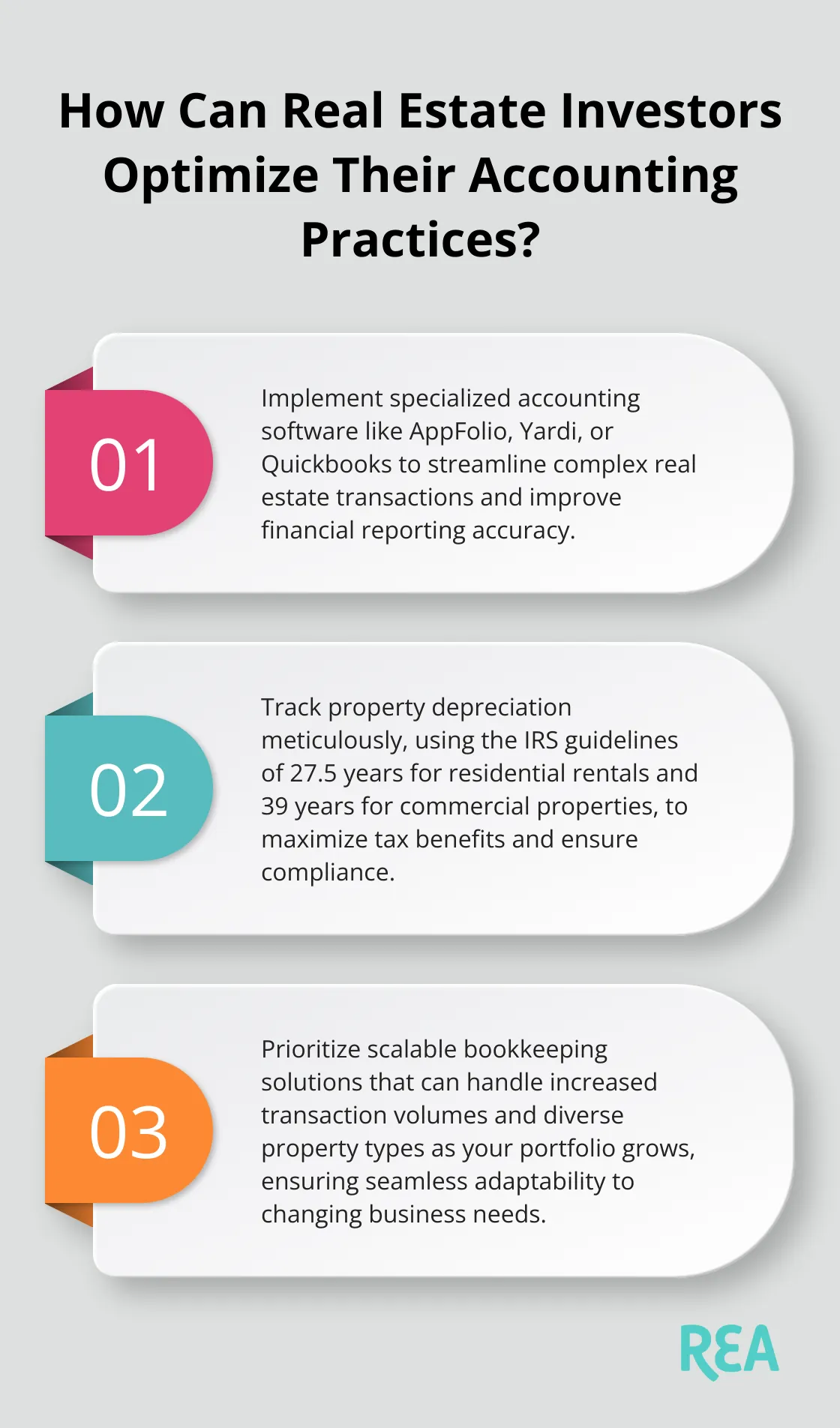
Real estate businesses must accurately record assets and liabilities (including property values, mortgages, and depreciation). The Internal Revenue Service (IRS) allows for depreciation of residential rental properties over 27.5 years and commercial properties over 39 years. Failure to track this can result in missed tax benefits and potential compliance issues.
Importance of Accurate Financial Records
Accurate financial records form the backbone of any successful real estate venture. They provide clarity on profitability, assist in tax preparation, and inform investment decisions. A study by Deloitte found that companies with robust financial reporting are 79% more likely to experience higher business growth.
Technology and Expertise
To address these challenges, many real estate companies turn to specialized accounting firms. These firms often use industry-leading software (such as AppFolio, Yardi, and Quickbooks) to ensure precise financial reporting and compliance. Outsourcing to a specialized firm can significantly reduce the burden of complex bookkeeping needs, eliminate the need for in-house training, and provide access to industry-specific expertise.
As we move forward, we'll explore the pros and cons of in-house versus outsourced bookkeeping solutions, helping you make an informed decision for your real estate business.
In-House vs. Outsourced Bookkeeping: Making the Right Choice
The In-House Approach: Challenges and Considerations
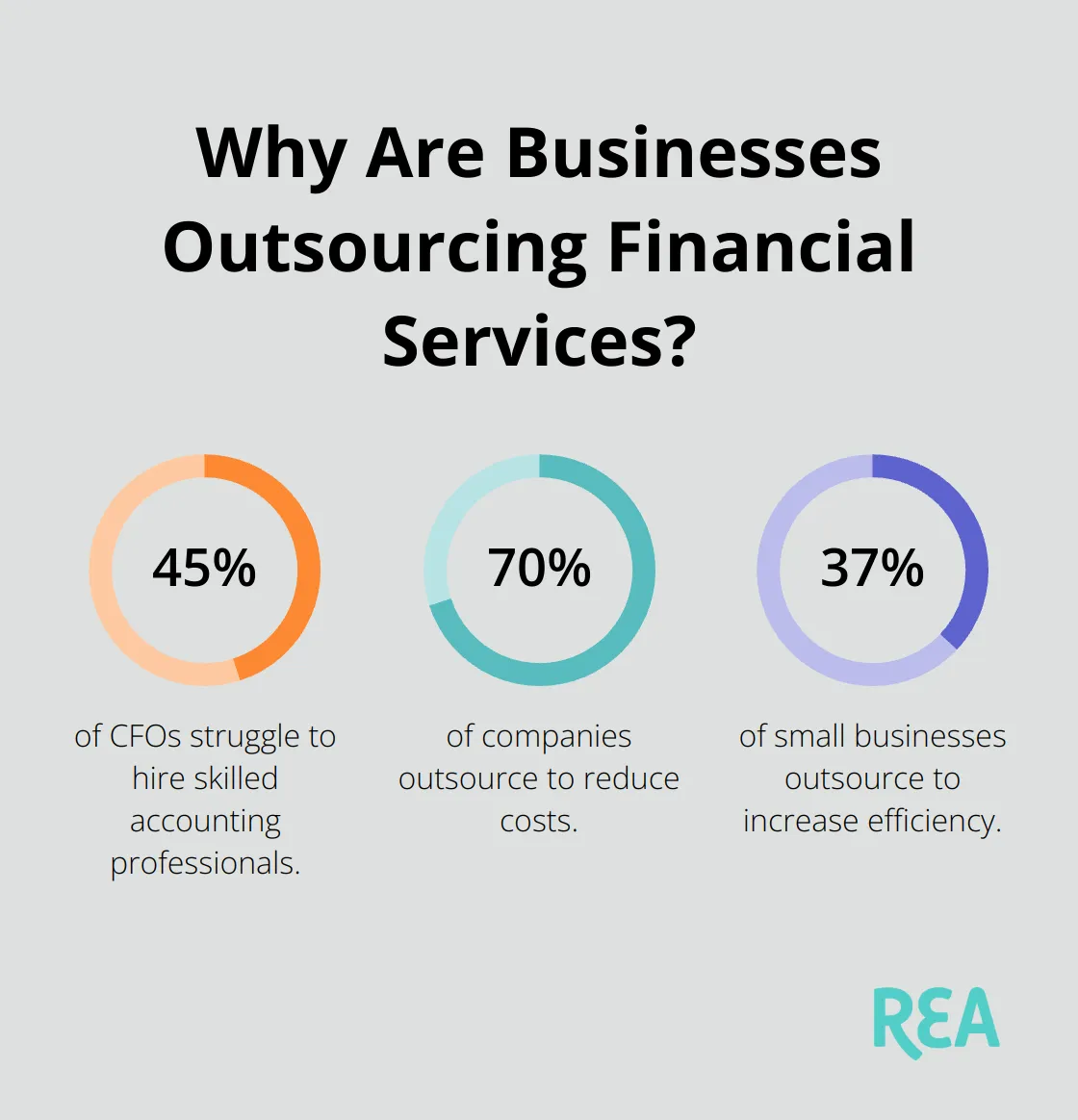
Many real estate companies start with in-house bookkeeping, believing it offers more control and cost savings. However, this approach often presents unexpected challenges. A survey by Robert Half reveals that 45% of CFOs struggle to hire skilled accounting professionals. This talent shortage can result in subpar financial management and increased risk of errors.
In-house bookkeeping also requires substantial investment in software, training, and ongoing education. The American Institute of CPAs reports that accounting professionals need an average of 40 hours of continuing education annually to stay current with regulations and best practices. For real estate companies, this represents a significant time and financial commitment.
The Power of Outsourcing: Expertise and Efficiency
Outsourcing bookkeeping to specialized firms has gained traction in the real estate industry. A study by Deloitte found that 70% of companies outsource to reduce costs, while 40% do so to access specialized expertise. This trend is particularly relevant in real estate, where financial complexities demand industry-specific knowledge.
Specialized accounting firms offer tailored solutions for real estate accounting, leveraging advanced software and deep industry expertise. This specialized approach can lead to more accurate financial reporting, better compliance, and valuable insights for strategic decision-making.
Cost Considerations: Hidden Expenses vs. Streamlined Solutions
While in-house bookkeeping might seem cost-effective initially, hidden expenses often accumulate. The Society for Human Resource Management estimates the average cost-per-hire at $4,129 (not including ongoing salary and benefits). In contrast, outsourcing provides access to a team of experts at a fraction of the cost.
A report by Clutch reveals that 37% of small businesses outsource to increase efficiency. For real estate companies, this efficiency translates to more time focused on core business activities like property acquisition and management, rather than grappling with complex financial tasks.
Making the Right Choice for Your Business
The decision between in-house and outsourced bookkeeping depends on your company's size, complexity, and growth goals. However, for many real estate businesses, partnering with specialized firms offers a compelling combination of expertise, efficiency, and cost-effectiveness that's hard to match with an in-house team.
As you weigh your options, consider the long-term impact on your business's financial health and operational efficiency. The next section will explore key factors to evaluate when choosing a bookkeeping solution, ensuring you make an informed decision that aligns with your real estate company's unique needs and objectives.
What Makes a Great Real Estate Bookkeeping Solution?
Industry-Specific Expertise
A bookkeeping solution tailored for real estate must demonstrate deep industry knowledge. Look for providers with a proven track record in handling complex real estate transactions. The National Association of Realtors reports that 36% of real estate investors own multiple properties, which underscores the need for expertise in managing diverse portfolios.
When you evaluate potential solutions, ask about their experience with property management accounting, real estate investment trusts (REITs), and commercial real estate. A provider with experience managing a large number of residential units and commercial property offers the specialized knowledge needed to navigate the intricacies of real estate finance.
Cutting-Edge Technology Integration
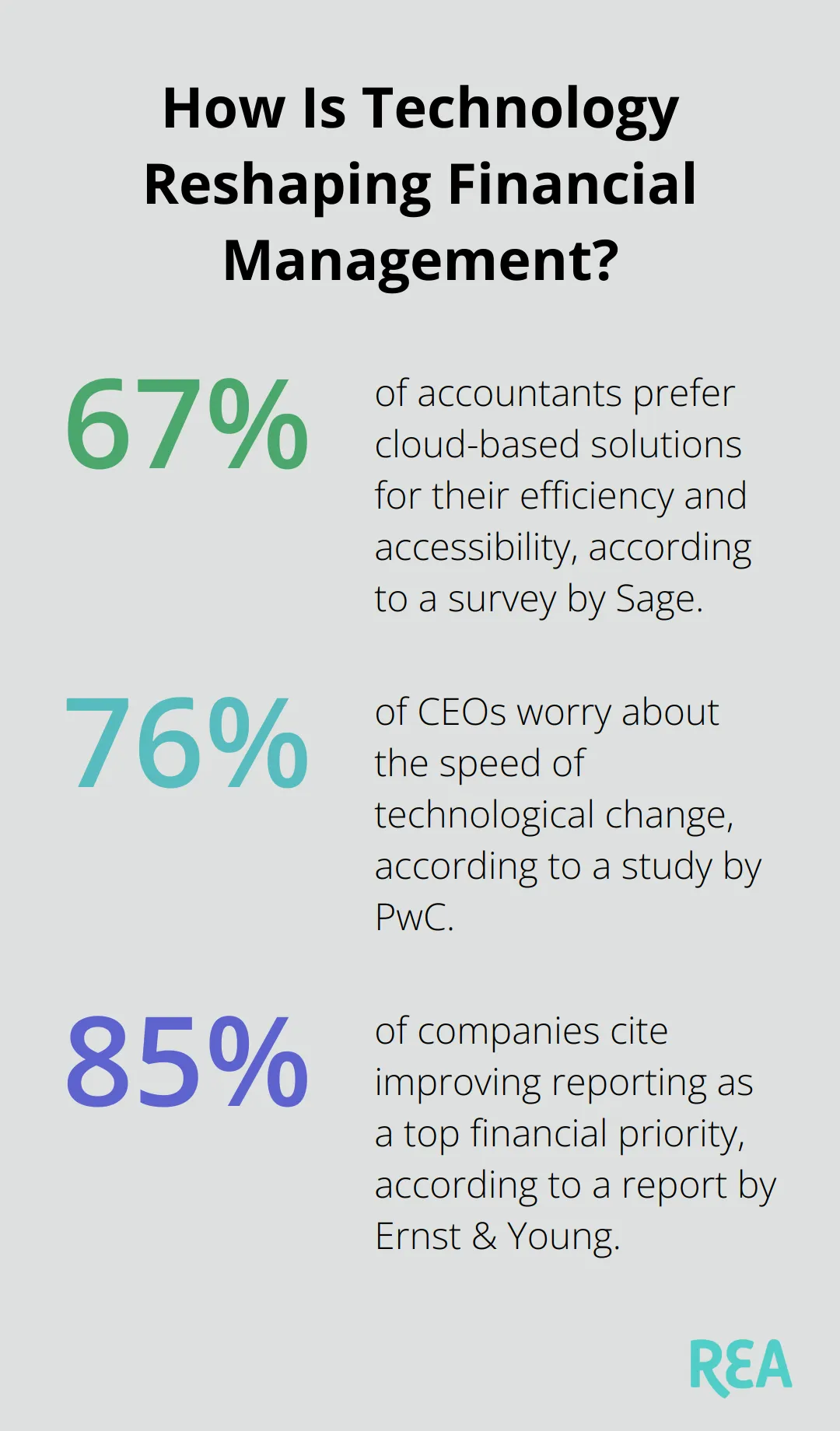
The right bookkeeping solution should leverage advanced technology to streamline processes and enhance accuracy. A survey by Sage found that 67% of accountants prefer cloud-based solutions for their efficiency and accessibility. When you assess options, prioritize those that utilize industry-leading software such as AppFolio, Yardi, or Quickbooks.
These platforms offer features specifically designed for real estate accounting (including automated rent collection, property-specific reporting, and integration with property management systems). The ability to access real-time financial data from anywhere can significantly improve operations for real estate professionals who are constantly on the move.
Scalability and Adaptability
As your real estate portfolio grows, your bookkeeping needs will evolve. Choose a solution that can scale with your business. A study by PwC found that 76% of CEOs worry about the speed of technological change. This highlights the importance of selecting a bookkeeping partner that continually updates their technology and processes to meet changing industry demands.
Consider how the solution handles increased transaction volumes, additional properties, or expansion into new real estate sectors. Can they accommodate your growth without compromising on service quality or reporting accuracy? The ideal provider should have the capacity to manage diverse portfolios, from small residential properties to large commercial complexes, ensuring seamless scalability as your business expands.
Compliance and Reporting Excellence
Real estate accounting involves complex regulatory requirements and tax implications. The Internal Revenue Service (IRS) allows for depreciation of residential rental properties over 27.5 years and commercial properties over 39 years. A top-tier bookkeeping solution should not only know these regulations but also proactively ensure your financial practices remain compliant.
Look for providers that offer comprehensive reporting capabilities. According to a report by Ernst & Young, 85% of companies cite improving reporting as a top financial priority. Your bookkeeping solution should deliver clear, actionable financial insights that inform strategic decision-making and satisfy regulatory requirements.
Final Thoughts
Choosing the right bookkeeping solution for your real estate company will significantly impact your business's financial health and growth potential. We explored the unique challenges of real estate accounting, compared in-house and outsourced options, and highlighted key factors for selecting an effective solution. Proper bookkeeping for real estate companies provides clear financial visibility, enables informed decision-making, and ensures compliance with complex regulations.
The ideal bookkeeping solution for a real estate company should offer industry-specific expertise, leverage cutting-edge technology, and excel in compliance and reporting. These elements are essential for navigating the complexities of real estate finance and positioning your company for success. Many real estate businesses find that partnering with a specialized outsourced accounting firm offers the most comprehensive and cost-effective solution.
At REA, we provide tailored bookkeeping services for the real estate industry. We combine expertise with advanced technology to enhance operational efficiency and profitability. You should assess your current bookkeeping practices and identify areas for improvement to build a solid foundation for your real estate company's future success.
Want this handled for you?
Schedule a Call