
Capitalized interest in real estate development is the loan interest a developer adds to a project's cost during construction instead of expensing it. Capitalization stops when the property is placed in service, and mistakes around that date can force a restatement. Strong Real Estate Development Accounting depends on getting that date and the interest math right.
By REA Team, Property Management Experts
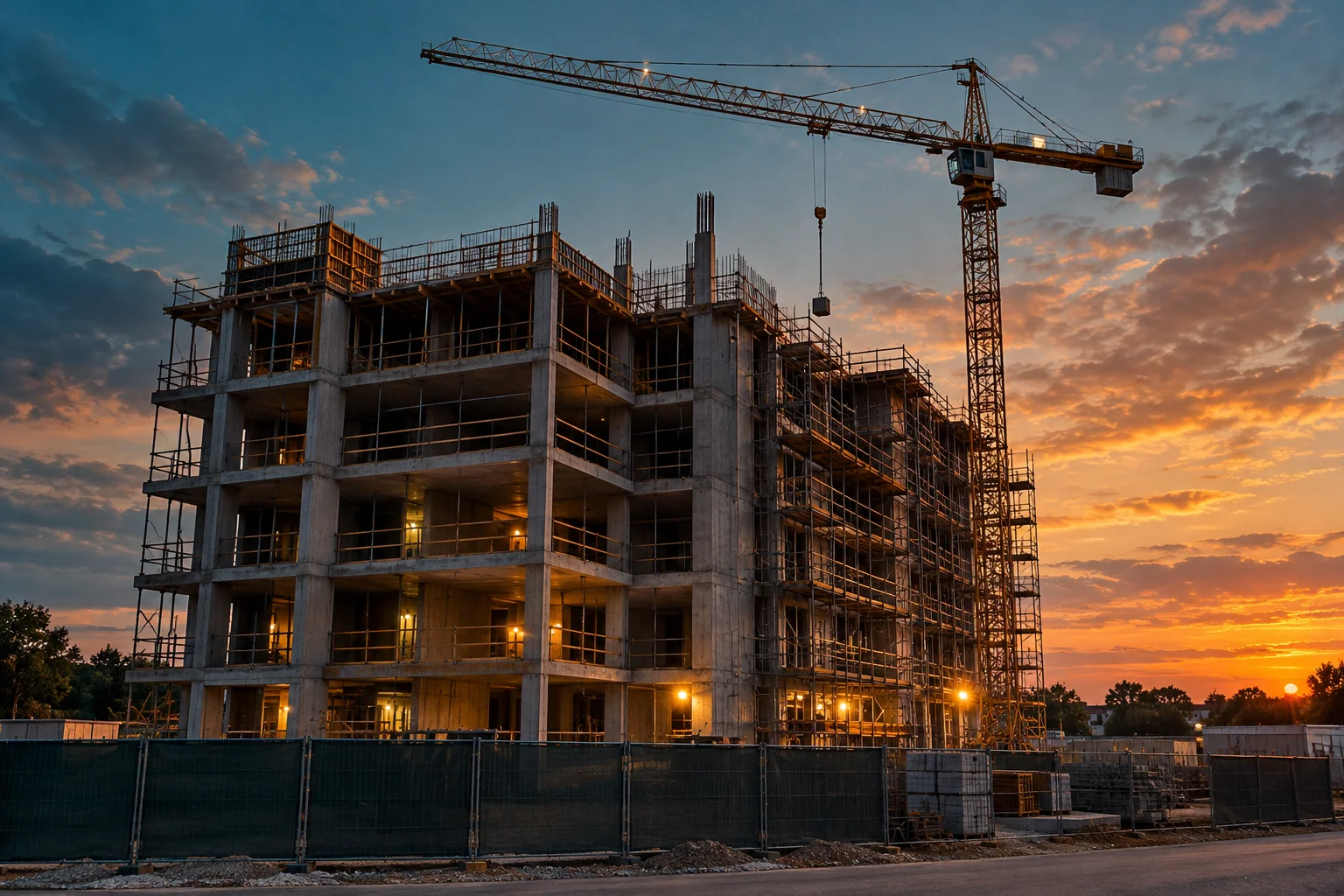
What Is Capitalized Interest in Real Estate Development?
Capitalized interest is borrowing cost recorded as part of an asset's value instead of as a current expense. Under ASC 835-20, the FASB standard for financial reporting on capitalizing interest, a building constructed as a discrete project for the owner's use, or for sale or lease, qualifies while it is being readied.
The logic is matching. A building earns no revenues during construction, so interest on the construction financing is a cost of getting it ready, like lumber and labor. Costs that relate to the asset sit on the balance sheet with it.
Is Capitalized Interest on Construction in Progress Expensed or Added to the Asset Cost?
Both, at different times. During construction, the interest is added to the asset cost. After the property is placed in service, it reaches the income statements through depreciation. On a project built for sale, it moves into cost of sales when the buyer closes. Interest that fails the test is expensed as interest expense when incurred.
Which Interest Costs Can a Developer Capitalize?
Typically these qualify:
- Interest on construction loans and other borrowings with stated rates
- Imputed interest on certain payables, such as some seller notes
- Amortization of loan fees and discounts treated as interest cost
- Accrued interest, even when unpaid, because the test is cost incurred, not cash paid
The total cannot exceed the interest actually incurred in the period.
When Does Interest Capitalization Begin and End on a Development Project?
Interest capitalization starts only when three things are true: the developer has made expenditures on the asset, work to ready it is underway, and interest is being incurred. That work includes design and permitting, so early investments in plans count, not only framing.
The capitalization period ends when the asset is substantially complete and ready for its intended use. When a project has buildings that can each be used independently, capitalization on each stops as it finishes. Long work stoppages generally pause the clock.
Can You Capitalize Interest on Land Held for Development?
Only while development work is underway. Raw land bought and held, with no entitlement, grading or utility work in progress, is not a qualifying asset, so its interest is expensed. Once preparation begins, the land cost joins accumulated expenditures and capitalization starts. Lots developed for sale qualify the same way.
How to Calculate Capitalized Interest in Real Estate Development
Calculating capitalized interest in real estate development takes three steps. First, find weighted-average accumulated expenditures, which weights each draw by how long it was outstanding. Second, apply the capitalization rate: the project loan's rate, then the weighted-average rate on the developer's other debts for any expenditures above the loan. Third, capitalize the lower of that result and the interest actually incurred.
Here is an example, for illustration only. A developer builds a 48-unit apartment building with a 7% construction loan. Spending was $2,000,000 on January 1, $3,000,000 on July 1 and $1,000,000 on October 1.
- $2,000,000 x 12/12 = $2,000,000
- $3,000,000 x 6/12 = $1,500,000
- $1,000,000 x 3/12 = $250,000
Weighted-average accumulated expenditures total $3,750,000. At 7%, the avoidable interest is $262,500. If the lender charged $290,000 that year, the developer capitalizes $262,500 and expenses the other $27,500. Next year the capitalized amount joins the expenditure base, so the base keeps growing until completion.
Capitalized Interest Journal Entry
| Account | Debit | Credit | |---|---|---| | Construction in progress (capitalized interest) | $262,500 | | | Interest expense | $27,500 | | | Cash or accrued interest payable | | $290,000 |
The interest expense line hits the income statements now. The construction in progress line stays on the balance sheet until the asset is placed in service.

How Does the Placed-in-Service Date Affect Capitalized Interest?
The placed-in-service date is when the property is ready and available for its intended use. It ends the capitalization period, starts depreciation, and turns ongoing interest into interest expense once the building earns rental revenues. A certificate of occupancy is often the cleanest evidence. On phased projects, each independently usable phase may have its own date, which is an added consideration.
What Happens If You Keep Capitalizing Interest After the Placed-in-Service Date?
Asset value is overstated, interest expense is understated, and net income is inflated on the income statements. The financial reporting error grows every month. A material error generally means restating prior-period financial statements under ASC 250, while an immaterial one may be corrected in the current period.
How Is Capitalized Interest Depreciated After the Property Is Placed in Service?
Capitalized interest becomes part of the building's cost, so it will depreciate with the building over its useful life. The share allocated to land does not depreciate. For tax, recovery periods are generally 27.5 years for residential rental property and 39 years for nonresidential property, while book useful life is a management estimate.
How Does Capitalized Interest GAAP (ASC 835-20) Differ From Section 263A?
ASC 835-20 governs the books. Section 263A of the Internal Revenue Code governs taxable income. Both use an avoided-cost idea, but the details differ.
| Item | ASC 835-20 (book) | Section 263A (tax) | |---|---|---| | Purpose | Financial reporting | Taxable income | | Starts | Expenditures made, work underway, interest incurred | Production of the property begins | | Ends | Asset substantially complete and ready for intended use | Property ready to be placed in service or held for sale | | Result | Higher asset cost on the balance sheet | Higher tax basis, recovered through depreciation or at sale |
Because the two rule sets can produce different amounts, developers track book and tax figures separately and reconcile them with a tax advisor. Whether Section 263A applies to a given owner depends on the facts.
Why Do Developers Have to Restate Their Books Over Capitalized Interest Errors?
Restatements tied to capitalized interest in real estate development usually trace back to timing. Errors move interest between the balance sheet and the income statements. When the misstatement is material, the developer restates prior financial statements that investors and lenders already relied on. A buyer's due diligence tests the carrying asset value, so an inflated balance surfaces fast and puts sale proceeds under a harder look.
The usual causes:
- Capitalizing past the placed-in-service date
- Starting before expenditures and activity exist, often on idle land
- Capitalizing more than the interest actually incurred
- Treating a partly finished project as one unit
How Do You Avoid Capitalized Interest Errors and Restatements on a Development Project?
Good capitalized interest accounting comes down to a few habits:
1. Write down the start date, stop date and supporting evidence at kickoff, such as the permit and the certificate of occupancy. 2. Record expenditures by draw date each month, so the weighted average is a calculation, not a reconstruction. 3. Tie each loan to its project so the capitalization rate uses the right borrowings. 4. Cap the amount at actual interest and split land from depreciable improvements. 5. Review the schedule at completion, before the next close.
REA's team of 230+ property accountants provides Real Estate Accounting for developers and owner operators, and a consultation is a practical place to test a capitalization schedule against the loan agreement.
Common Questions About Capitalized Interest
What does it mean when interest is capitalized?
For capitalized interest in real estate development, it means the interest on a construction loan is recorded as part of the building's cost on the balance sheet, not as interest expense on the income statements. It reaches earnings later through depreciation, or through cost of sales when a buyer closes on a project built for sale.
Is capitalized interest good or bad?
Neither, because it is a requirement when the criteria are met, not a choice. It raises asset value and defers expense, so earnings look stronger during construction, which is why lenders and auditors check the calculation. The cash cost of the loan is identical either way. The risk is a calculation error that leads to a restatement.
Do you pay tax on capitalized interest?
Not directly. Interest on a property you build is generally not deducted in the year it is paid. Under Section 263A it is added to the property's tax basis and recovered through depreciation or at sale. Whether Section 263A applies to your project depends on the facts, so confirm the treatment with a tax advisor.
How do you account for capitalized interest?
Track accumulated expenditures by date, apply the capitalization rate, and cap the result at interest actually incurred. Debit construction in progress for the capitalized amount and interest expense for the rest, then credit cash or accrued interest payable. Stop on the placed-in-service date and depreciate the asset over its useful life.
Get Your Capitalization Schedule Reviewed Before Completion
If a project is nearing completion, a second look at your capitalization period can prevent a restatement later. To talk it through with REA's team, schedule a consultation.
Want this handled for you?
Schedule a Call