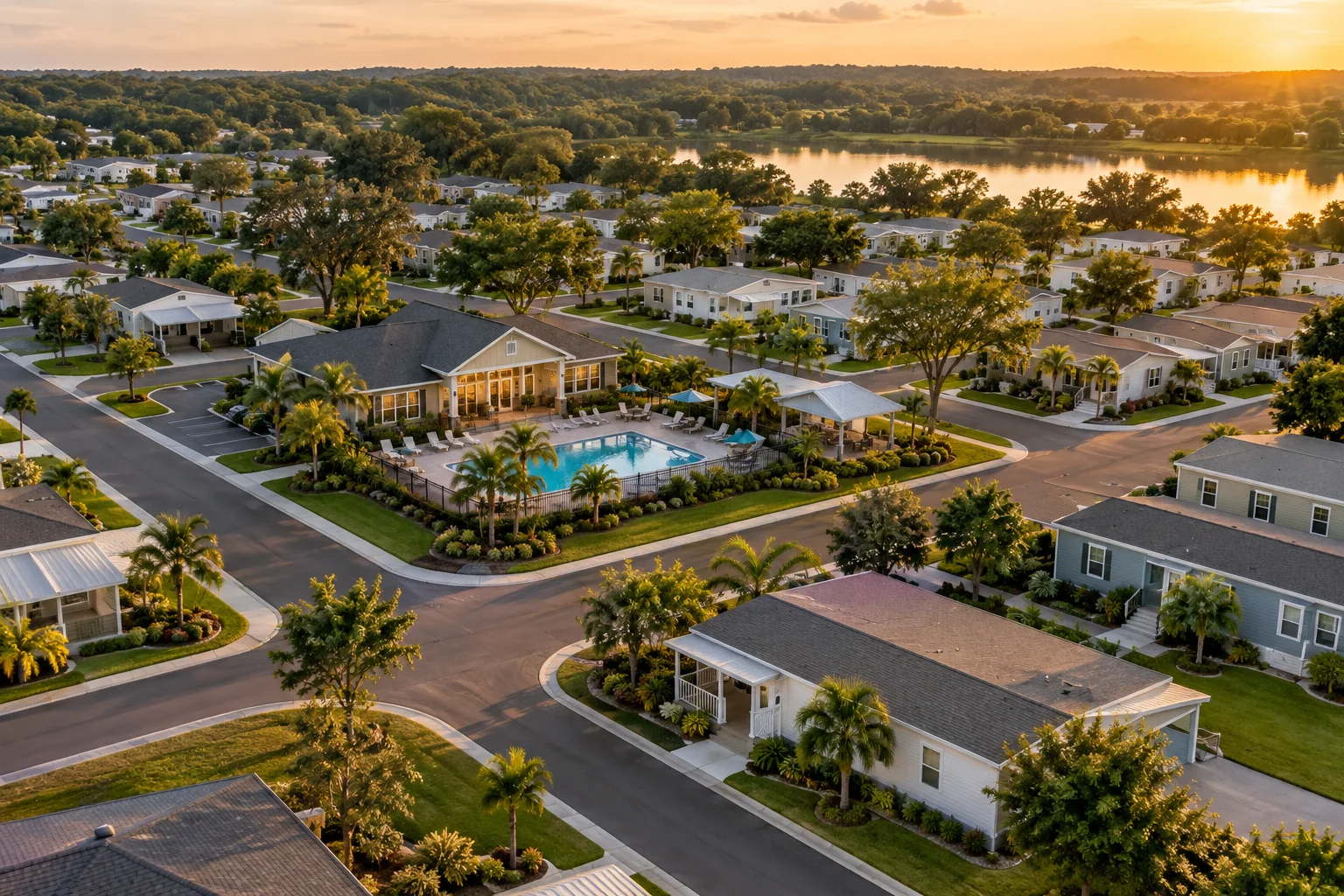
Mobile home park lot rent is the monthly fee a resident pays for the land under a home, and it belongs in a different income account than the sale of a home. Splitting the two in your Real Estate Accounting setup keeps occupancy, margins, and taxes readable.
By REA Team, Property Management Experts
What Mobile Home Park Lot Rent Is and How It Differs From Home Sales Income
Mobile home park lot rent is recurring revenue. A resident who owns one of the mobile homes pays the park each month for the site, utility hookups, and shared roads and common areas. Home sales income is different: the park sells a home it owns and books the proceeds once, along with the cost of buying, moving, and repairing it. Blend the two and an owner cannot tell whether the park earns from land or from deals. Because mobile homes are a major source of affordable housing, rent affordability limits how fast a park can raise rates.
What is typically included in lot rent?
Rent usually pays for the site plus shared services: road upkeep, common-area maintenance, trash, and sometimes water and sewer. Amenity-driven home communities near Clearwater, FL and Orlando, FL sell a lifestyle with clubhouses, swimming pools, basketball courts, playgrounds, or RV storage. Write the package into the lease, because it decides whether a separate utilities charge is revenue or a reimbursement.
How to Set Up Mobile Home Park Bookkeeping for Lot Rent and Home Sales
Mobile home park bookkeeping works when every dollar lands in an account that names its source. REA's team of 230+ property accountants applies that logic across the major property platforms.
Step 1: Split lot rent from home sales in the chart of accounts
Create separate income accounts before you post a single transaction. A single Rental Income account hides the margin on home sales and distorts revenue per lot. In QuickBooks or a property platform, a structure like this keeps each stream visible. It is the same source-based logic behind any rental property chart of accounts, plus home sales and cost lines.
| Account | What posts here | Type | |---|---|---| | Lot Rent Income | Monthly site rent from every occupied lot | Income | | Late Fees | Fees charged on overdue rent | Income | | Utility Reimbursements | Resident charges tied to park utility bills | Income or expense offset | | Home Sales Revenue | Sale price of park-owned homes | Income | | Cost of Homes Sold | Purchase, setup, and repair cost of homes sold | Cost of goods sold |
Step 2: Record lot rent, late fees, and utility reimbursements
Post mobile home park lot rent to Lot Rent Income each month, lot by lot, so the ledger ties back to the rent roll (the list of every lot, resident, and rent amount). Post late fees and optional charges such as RV storage or fees for pets to their own accounts, since many states limit what a park can charge. Submetered utilities billed at exact cost may be a reimbursement, while a flat allocated charge may be revenue, so settle utility billback accounting before the first bill goes out.
Step 3: Account for park-owned homes versus resident-owned homes
For mobile homes the resident owns, nothing touches the park's balance sheet. A park-owned home held for sale goes in inventory at cost, including purchase and setup. When it sells, move that cost to Cost of Homes Sold and record the price in Home Sales Revenue. A park-owned home leased to a tenant is a depreciated fixed asset. Confirm each treatment with your CPA.
Step 4: Do you need separate bank accounts for lot rent and home sales?
The law often does not require it for operating funds, but state rules commonly require security deposits to be held separately, so check yours. Even where optional, a second account for home sale proceeds speeds reconciliation and keeps a resident's rent from being mistaken for a buyer's down payment.
What Are Mobile Home Lot Rent Prices Near Me, and How Do Parks Benchmark Them?
People who search for mobile home lot rent prices near me are often shopping for affordable housing, so a park owner should compare markets with real data. First, collect current rents from comparable mobile home parks within a few miles. Second, adjust for what each rent includes, such as spaces, lot size, whether pets are allowed, and the age of the mobile homes. Third, compare with your own rent roll.
Location matters. A park in Santee, California competes in a different market than a park near Orlando, FL, or one in Clearwater, FL, because nearby dining and neighborhoods differ. Searches for mobile home park lot rent Florida and mobile home park lot rent California return different results because state rules and local ordinances differ.
Amenities move the number too. Residents of Clearwater home communities may value pools, playgrounds, and walkable dining, while Santee residents weigh convenience to freeways. Searches for cheap mobile home park lot rent show that some residents shop on affordability alone, but the better comparison is revenue per lot after included utilities, water, and sewer. Never benchmark a park with lakes, basketball courts, and lawn care against a bare one.
Resident mix matters too. An all ages community and one for seniors carry different expectations, so benchmark each against its own ages community. Many home communities rely on rent affordability to keep occupancy steady, especially with seniors on fixed incomes.
How much is mobile home park lot rent per month on average?
No single average fits your park. Monthly rent depends on region, lot size, utilities included, infrastructure age, local regulation, and the amenities on site, from clubhouses to pet areas. Anchor on your own rent roll and three to five comparable home communities, ideally another all ages community, then test the result against resident affordability.
Lease Terms, Rent Increases, and Tax Treatment
Is mobile home land lease monthly or yearly?
Rent is almost always billed monthly, but the lease term varies. Some home parks run month-to-month agreements, others use longer terms, and some states regulate minimum terms. For the books, the term changes one thing: when a resident prepays, record prepaid rent as a liability and recognize it monthly.
How often can a park raise mobile home park lot rent?
The lease, state statute, and any local ordinance set the frequency, not accounting. Florida and California both require advance written notice before an increase, and some California cities cap the amount. Because rent is a major cost of affordable housing for residents, especially seniors, expect questions. Confirm current rules for your ages community with a park attorney, then enter each effective date on the rent roll.
Is lot rent income or home sales income taxed differently for a park owner?
Often yes. Mobile homes held as inventory usually produce ordinary business income, while selling a depreciated rental home can trigger depreciation recapture. Separate accounts show your tax professional which applies.
Common Mistakes and How to Tell the Books Are Right
Four errors show up repeatedly in mobile home park books:
1. Posting home sale proceeds into rent income, which inflates revenue per lot. 2. Booking utility pass-throughs as income with no matching expense. 3. Folding late fees into rent, which hides collection problems. 4. Expensing home setup costs instead of capitalizing them.
Three checks show the books work. Monthly rent income divided by occupied lots matches the rent roll. Every sold home shows a revenue line and a cost line. Each bank account reconciles.
Get Your Park's Income Accounts Split the Right Way
If rent and home sales still share one income account, the margin on each stays hidden. To talk through how your accounts should be split, schedule a consultation with REA.
Want this handled for you?
Schedule a Call