Table of Contents
- What is an LLC?
- What is an S Corporation?
- Forming a Real Estate Business as an LLC
- Forming a Real Estate Business as an S Corporation
- What's an LLC taxed as a Partnership?
- What's an LLC taxed as an S-Corporation?
- Benefits of LLC for Real Estate Investing
- Disadvantages of LLC for Real Estate Investing
- Benefits of S Corp for Real Estate
- Disadvantages of S Corp for Real Estate
- Frequently Asked Questions (FAQs)
- What are the main differences between an LLC and an S Corp?
- Can I switch my LLC to an S Corp later?
- Do I need an S Corp if I only own rental properties?
- How does an S Corp impact real estate investors who flip houses?
- Final Considerations
- Take the Next Step
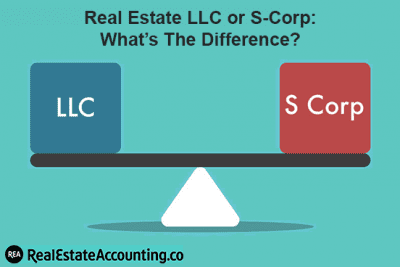
As a real estate investor, you may be thinking about forming a business to purchase your properties. After all, buying real estate as a business gives you greater tax benefits and legal protections.
But maybe you're not sure which kind of business entity to form. Should you create an LLC taxed as a partnership or an LLC taxed as an S-Corporation?
Let's look at the differences between the two and how they shape your real estate business.
What is an LLC?
A Limited Liability Company (LLC) is a flexible business structure that provides liability protection to its owners while allowing pass-through taxation. This means business income is reported on the owner's personal tax return, avoiding corporate double taxation. Real estate investors often prefer LLCs due to their simplicity, asset protection benefits, and tax flexibility. Each state has its own rules governing LLCs, so compliance with local regulations is necessary when setting up this entity.
An LLC can be a single-member or multi-member entity. Single-member LLCs report their income on a Schedule C, making tax filing relatively simple. Multi-member LLCs must file Form 1065, which outlines how profits and losses are distributed among members. The flexibility of LLCs allows investors to structure ownership and profits as they see fit, making them an appealing choice for partnerships in real estate investments.
What is an S Corporation?
An S Corporation (S Corp) is a tax classification rather than a separate business entity. It allows a business to pass income directly to shareholders, avoiding corporate taxation, while also offering tax-saving opportunities for active business owners. S Corps come with more restrictions than LLCs, including limits on ownership and mandatory corporate formalities such as annual meetings and shareholder documentation. Despite these requirements, an S Corp can be an excellent option for real estate professionals actively engaged in property transactions, flipping, or property management.
Forming a Real Estate Business as an LLC
Setting up an LLC for real estate investing is relatively simple. Investors must file Articles of Organization with their state and create an Operating Agreement outlining management responsibilities. Many investors use LLCs to hold rental properties because they provide asset protection and flexible tax options.
Forming a Real Estate Business as an S Corporation
For investors who opt for an S Corp, forming the business requires additional steps, including electing S Corp tax status with the IRS. Owners must also establish a payroll system and ensure compliance with corporate formalities, such as record-keeping and shareholder meetings.
What's an LLC taxed as a Partnership?
A limited liability company (LLC) is a legal entity that investors often use to buy real estate. Forming an LLC gives you more legal protection, privacy, and tax benefits.
Your business can either be a single-member LLC (just one owner) or a multi-member LLC, such as a partnership.
Filing taxes is relatively straightforward for a single-member LLC. You simply record your business' net profits in your personal tax return with a Schedule C. If you have partners, you can decide beforehand how much of the profits each person will receive, and it doesn't have to match the ownership percentage. For multi-member LLCs, your taxes are reported on Form 1065.
Income taxes for LLCs are due April 15. But multi-member LLCs must file their 1065 partnership tax return no later than March 15.
As the LLC owner, you pay a 15.3% self-employment tax and a regular income tax on all your profits, whether you distribute money to yourself and your partners or not. In other words, you don't get a tax deduction for distributions. You can pay these taxes quarterly or at the end of the tax year. To ensure owner distributions are calculated correctly, you must make sure you keep your financials accurate with proper real estate bookkeeping completed each month.
What's an LLC taxed as an S-Corporation?
An S-Corporation (or S-Corp) is a tax entity/designation. But in order to set up that tax structure, your business must already have a legal entity in place, such as an LLC. Once your business is incorporated, you can elect S-Corp status with Form 2553.
So how does an S-Corp work? And how is it different from a regular LLC?
First of all, an S-Corp has to file a separate tax return on Form 1120S, which is due March 15.
The business' net profit passes through to the owners with a K-1, which the owners then report on their individual tax returns. Unlike an LLC taxed as a partnership (the default), an S-Corp requires you to allocate the profit according to each person's exact percentage of ownership.
If you choose S-Corp status, you also have to pay yourself a reasonable salary (and the accompanying payroll taxes), according to the IRS. You still pay income taxes on your business' profit (which is net of your salary), but you only pay employment taxes, also called payroll taxes, on your salary. In other words, unlike a partnership, an S-Corp DOES get to deduct payroll paid to owners. These are due each month instead of simply at the end of the tax year.
Benefits of LLC for Real Estate Investing
LLCs offer liability protection, ensuring that personal assets remain separate from business-related lawsuits and debts. This structure is particularly beneficial for real estate investors, as it minimizes financial risks associated with property ownership. Additionally, LLCs provide tax flexibility, allowing members to choose their preferred tax classification. They also require fewer administrative formalities than corporations, making them easier to maintain.
Disadvantages of LLC for Real Estate Investing
While LLCs offer numerous benefits, they do come with some drawbacks. The primary disadvantage is that LLC owners must pay self-employment taxes on all profits, which can increase their overall tax liability. Additionally, some lenders may be hesitant to finance properties owned by an LLC, preferring corporations due to their structured nature. Lastly, the rules governing LLCs vary by state, potentially leading to additional costs and regulatory burdens.
Benefits of S Corp for Real Estate
One of the biggest advantages of forming an S Corp is the ability to reduce self-employment taxes. S Corp owners can classify a portion of their earnings as salary while taking the remaining profits as distributions, which are not subject to self-employment tax. Additionally, S Corps may attract more investors due to their structured governance and shareholder-friendly framework.
Disadvantages of S Corp for Real Estate
Despite the tax advantages, S Corps have limitations that may not suit all investors. Shareholder restrictions prevent non-residents and large groups from investing in an S Corp. Additionally, S Corps must follow strict corporate formalities, such as maintaining records and holding annual meetings. These administrative requirements can be time-consuming and costly for smaller real estate businesses.
Frequently Asked Questions (FAQs)
What are the main differences between an LLC and an S Corp?
An LLC is a flexible business structure that provides liability protection and tax flexibility, whereas an S Corp is a tax designation that allows business owners to potentially reduce self-employment taxes. S Corps require more administrative upkeep and must adhere to strict shareholder requirements.
Can I switch my LLC to an S Corp later?
Yes, if you initially form an LLC and later decide that an S Corp tax structure is more beneficial, you can file Form 2553 with the IRS to elect S Corp status.
Do I need an S Corp if I only own rental properties?
For passive rental income, an LLC is usually the better choice since rental income is generally not subject to self-employment tax. An S Corp is more beneficial for active real estate professionals involved in brokerage, flipping, or property management.
How does an S Corp impact real estate investors who flip houses?
Since house flipping is considered active income, an S Corp may be a beneficial tax structure for flippers.
Final Considerations
Choosing between an LLC and an S Corporation for your real estate investing business depends on various factors, including your investment strategy, income structure, and tax preferences. LLCs offer flexibility, liability protection, and are well-suited for passive rental income, whereas S Corps provide potential tax savings for active real estate professionals who earn income through flipping, brokerage, or management services.
If you primarily generate rental income and want to keep things simple, an LLC may be the best option due to its minimal administrative requirements and strong asset protection. On the other hand, if you actively participate in real estate transactions and are looking for ways to reduce self-employment taxes, electing S Corp status could be a strategic move.
Before making a decision, it's crucial to consult with a tax professional or business advisor who can analyze your specific financial situation and investment goals. Proper structuring can help you maximize tax benefits while ensuring compliance with state and federal regulations.
Take the Next Step
If you're ready to form your LLC or S Corp, start by consulting with REA, a trusted real estate accounting firm that specializes in structuring businesses for maximum financial efficiency. Our team of experts can guide you through entity selection, tax planning, and compliance to help your real estate business thrive.
Want this handled for you?
Schedule a Call