Table of Contents
- Why Multi-Family Accounting Differs from Single-Asset Bookkeeping
- Building a Scalable Chart of Accounts
- Segment by Property and Unit Class
- Distinguish Operating vs. Capital Categories
- Cash Flow Management Across a Large Portfolio
- Technology Platforms for Multi-Family Accounting
- Reporting, Compliance, and Tax Best Practices
- Investor Reporting Standards
- Depreciation and Cost Segregation
- 1099 Compliance
- Frequently Asked Questions
- Partner With a Multi-Family Accounting Team Built for Scale
Multi-family accounting requires purpose-built systems to track rental income, allocate operating expenses, and separate capital improvements across dozens or hundreds of units. For property managers scaling to large portfolios, the difference between breakeven and profitability often comes down to Property Management processes that enforce consistency from day one.
By REA Team, Property Management Experts
Why Multi-Family Accounting Differs from Single-Asset Bookkeeping
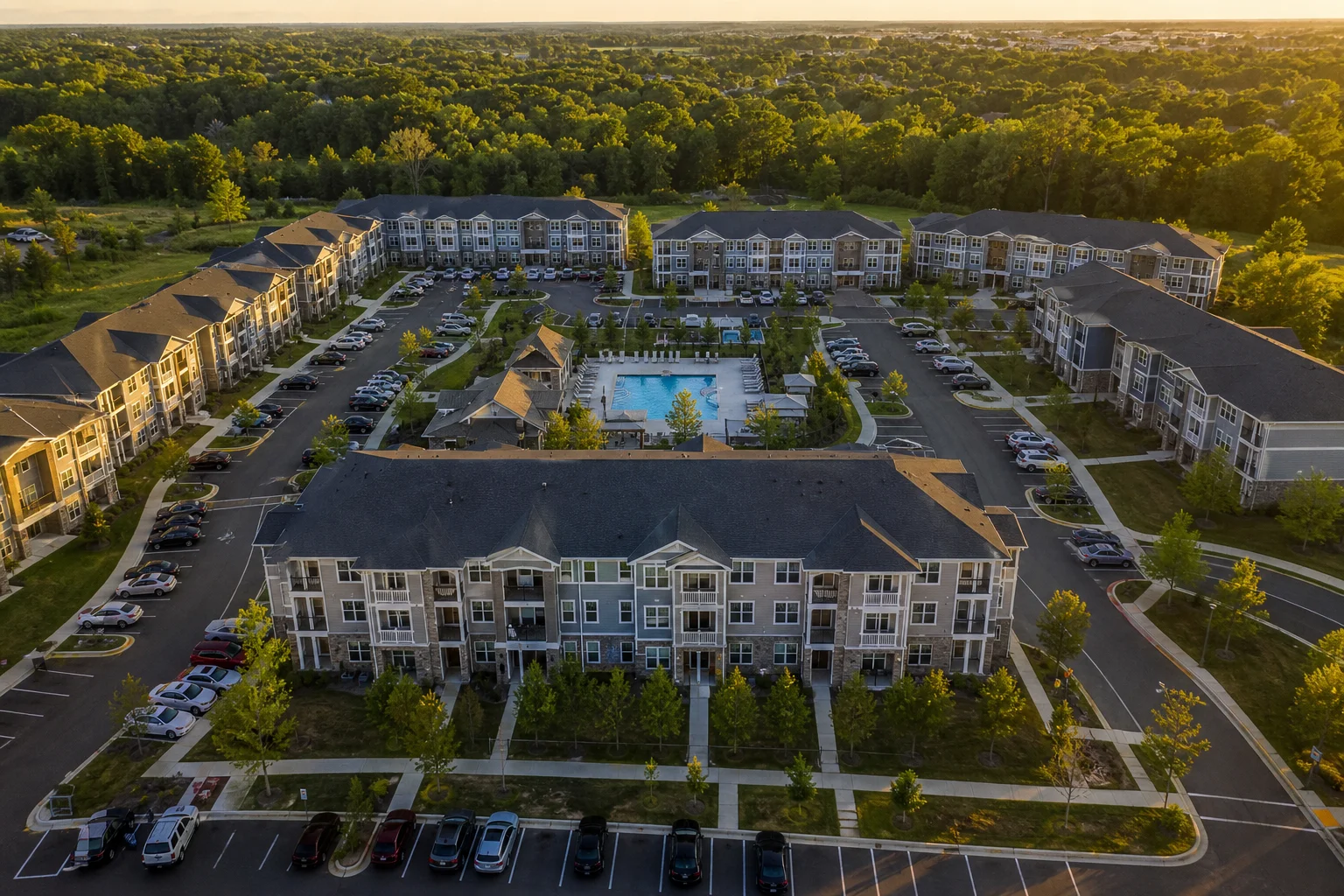
Multi-family properties introduce a layered accounting structure that single-family or commercial-only firms rarely encounter. Each unit generates its own rental income stream, while shared amenities, common area maintenance, and building-wide capital expenditures must be allocated proportionally across the portfolio. Without a structured chart of accounts, income and expenses blur across properties, making accurate cash flow analysis nearly impossible.
The core challenge: property managers must reconcile unit-level ledgers with entity-level reporting, often across multiple ownership structures including LLCs, partnerships, and REITs, each with different tax obligations and reporting requirements.
Building a Scalable Chart of Accounts
A well-designed chart of accounts is the foundation of sound multi-family accounting. For large portfolios, this means creating a structure that isolates performance by asset while still consolidating at the ownership level.
Segment by Property and Unit Class
Use cost centers or sub-accounts to isolate income expenses at the property level. This allows owners and investors to compare performance across assets without consolidating figures that should remain separate. A 200-unit complex and a 50-unit suburban property should never share a single revenue bucket.
Distinguish Operating vs. Capital Categories
One of the most common errors in real estate accounting is misclassifying capital expenditures as routine operating expenses. Replacing HVAC systems, re-roofing a building, or installing new plumbing are capital improvements that must be capitalized and depreciated, not expensed in the period incurred. The IRS tangible property regulations, finalized in 2013, provide guidance on the betterment, restoration, and adaptation test that governs this distinction.
Correctly classifying these costs protects against audit risk and produces a truer picture of net operating income.
Cash Flow Management Across a Large Portfolio
Reliable cash flow reporting is non-negotiable for multi-family investors and lenders alike. At scale, a few late-paying tenants or an unexpected capital call can create a shortfall that ripples across multiple properties if reserves are not tracked at the entity level.
Best practices for cash flow control include:
- Maintaining a minimum reserve account per property, typically one to three months of operating expenses
- Running rolling 13-week cash flow forecasts updated weekly
- Separating security deposit accounts from operating accounts, as required by most state statutes
- Reconciling bank accounts monthly, not quarterly
Real Estate Accounting teams that specialize in multi-family portfolios typically build automated reconciliation workflows inside platforms like AppFolio or Yardi to reduce manual overhead as the portfolio grows.
Those workflows only hold up when the underlying bookkeeping fundamentals are consistent from property to property: standardized coding, timely data entry, and reconciled subledgers before anything rolls up to the portfolio level.
Technology Platforms for Multi-Family Accounting
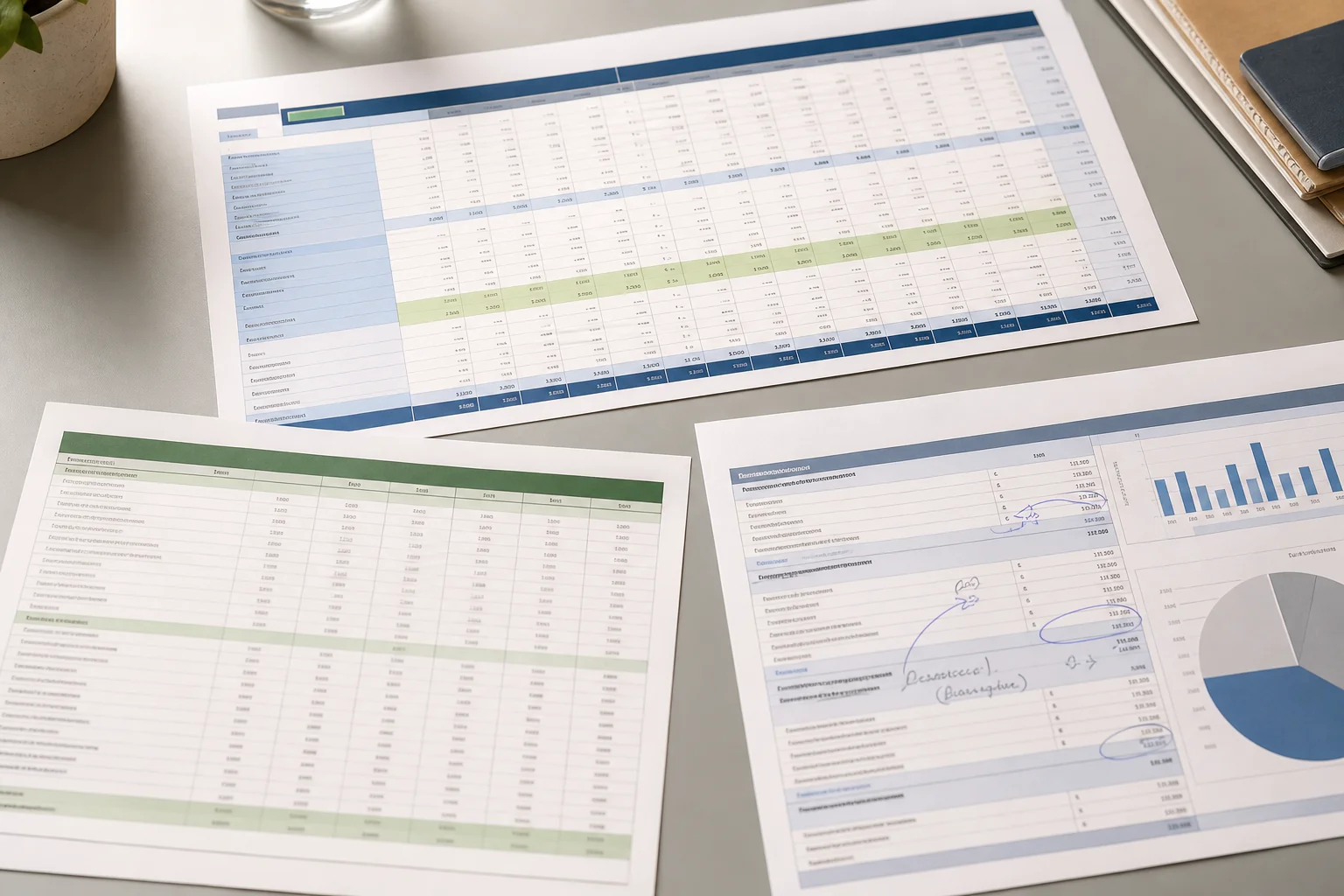
Choosing the right software is a strategic decision that affects every downstream process. The major platforms each have strengths suited to different portfolio profiles:
- AppFolio: Strong for residential-heavy multi-family portfolios up to a few thousand units, with built-in owner reporting and maintenance tracking
- Yardi Voyager: The enterprise standard for large-scale residential and mixed portfolios, offering deep GL customization and investor portal features
- Buildium: Well-suited for third-party property management firms handling multi-family assets under roughly 2,500 units
- MRI Software: Preferred by institutional owners and development companies that need project-level accounting alongside property operations
Portfolios that include mixed-use assets, residential units sitting over ground-floor retail, need an extra layer in the chart of accounts: separate revenue and expense codes for the residential and commercial components, since lease terms, common area maintenance structures, and reporting expectations differ between the two.
Reporting, Compliance, and Tax Best Practices
Investor Reporting Standards
Institutional investors and lenders require standardized financial packages. For large real estate portfolios, this typically means monthly reports covering a rent roll with occupancy rates and lease expiration schedules, a profit and loss statement by property, a balance sheet at the entity level, a capital expenditure summary with projected versus actual spend, and a variance analysis against budget.
Property managers who deliver these packages on schedule build the financial credibility that supports refinancing, new acquisitions, and investor distributions. The National Apartment Association publishes annual income and expense survey data that provides benchmarks for operating expense ratios by property class and market (NAA, 2024).
Vetting an outsourced accounting partner comes down to a short list of hiring questions: platform experience, portfolio-size fit, and references from owners operating at a similar scale.
Depreciation and Cost Segregation
Residential rental property depreciates over 27.5 years under MACRS. Cost segregation studies can reclassify components such as flooring, fixtures, and parking lots into 5, 7, or 15-year categories, accelerating deductions and improving near-term cash flow. For portfolios with recent acquisitions or significant capital improvements, a cost segregation analysis often yields material tax savings.
1099 Compliance
Multi-family operators who pay contractors, vendors, or service providers more than $600 in a calendar year must issue Form 1099-NEC. At scale, this requires a reliable vendor management system that captures W-9s at onboarding, not at year-end. Capital projects add another wrinkle: costs tied to a specific renovation or development should be tracked separately from routine vendor spend so they can be capitalized correctly and rolled into the right depreciation schedule once the work is placed in service.
Frequently Asked Questions
What is multi-family accounting and how does it differ from standard bookkeeping?
Multi-family accounting tracks income expenses, operating expenses, and capital expenditures across multiple residential units simultaneously. Unlike standard bookkeeping, it requires unit-level ledgers, property-level cost centers, and entity-level consolidation across multiple ownership structures. Accurate property management reporting at this scale demands purpose-built real estate software and a standardized chart of accounts designed for large portfolios.
How should capital improvements be recorded in a multi-family portfolio?
Capital improvements must be capitalized and depreciated over their useful life rather than expensed in the period incurred. The IRS tangible property regulations, finalized in 2013, use a betterment, restoration, and adaptation test to determine which costs qualify. Common examples include roof replacements, HVAC system upgrades, and structural renovations. Misclassifying these as operating expenses overstates costs in the current period and understates asset value on the balance sheet.
What cash flow metrics matter most for large multi-family portfolios?
Net operating income (NOI), debt service coverage ratio (DSCR), and effective gross income (EGI) are the metrics lenders and investors track most closely. NOI equals rental income minus operating expenses before debt service. DSCR compares NOI to annual debt payments. EGI adjusts gross potential rent for vacancy and credit loss to arrive at actual collections, providing a realistic cash flow baseline for forecasting.
Which software platforms are best for multi-family accounting at scale?
Yardi Voyager and MRI Software are the enterprise standards for large multi-family portfolios. AppFolio works well for residential-focused operators managing up to several thousand units. Buildium is popular among third-party property management firms. The best choice depends on portfolio size, asset class mix, investor reporting requirements, and whether the operator manages the properties internally or through a third party.
When should a multi-family operator outsource accounting?
Outsourcing becomes cost-effective when the internal team spends more time on reconciliation than on portfolio operations, when audit findings reveal classification errors, or when portfolio growth outpaces what a single bookkeeper can manage accurately. An outsourced firm with real estate specialization brings platform expertise, scalable staffing, and standardized reporting that reduces error risk as the portfolio scales.
Partner With a Multi-Family Accounting Team Built for Scale
Managing accounting across a large real estate portfolio requires the right systems, the right technology, and deep domain expertise working in concert. If your current processes are creating reporting gaps or compliance risk, Lets Connect and we will show you how REA's outsourced accounting model supports portfolios of any size.
Want this handled for you?
Schedule a Call