Table of Contents
- Core Financial Documents Your CPA Will Request
- Income Statements and Balance Sheets
- General Ledger and Chart of Accounts
- Bank Reconciliations
- Lease and Tenant Records
- Tax Records and IRS Compliance
- Real Estate Audit Preparation and Your Accounting Software
- Frequently Asked Questions
- Build an Audit-Ready Portfolio Year-Round
Real estate audit preparation starts well before your CPA firm sends a request list. Property owners and managers who keep clean Real Estate Accounting records, organized lease files, and reconciled ledgers move through the audit process faster, with fewer surprises and lower disruption to daily operations.
By REA Team, Property Management Experts
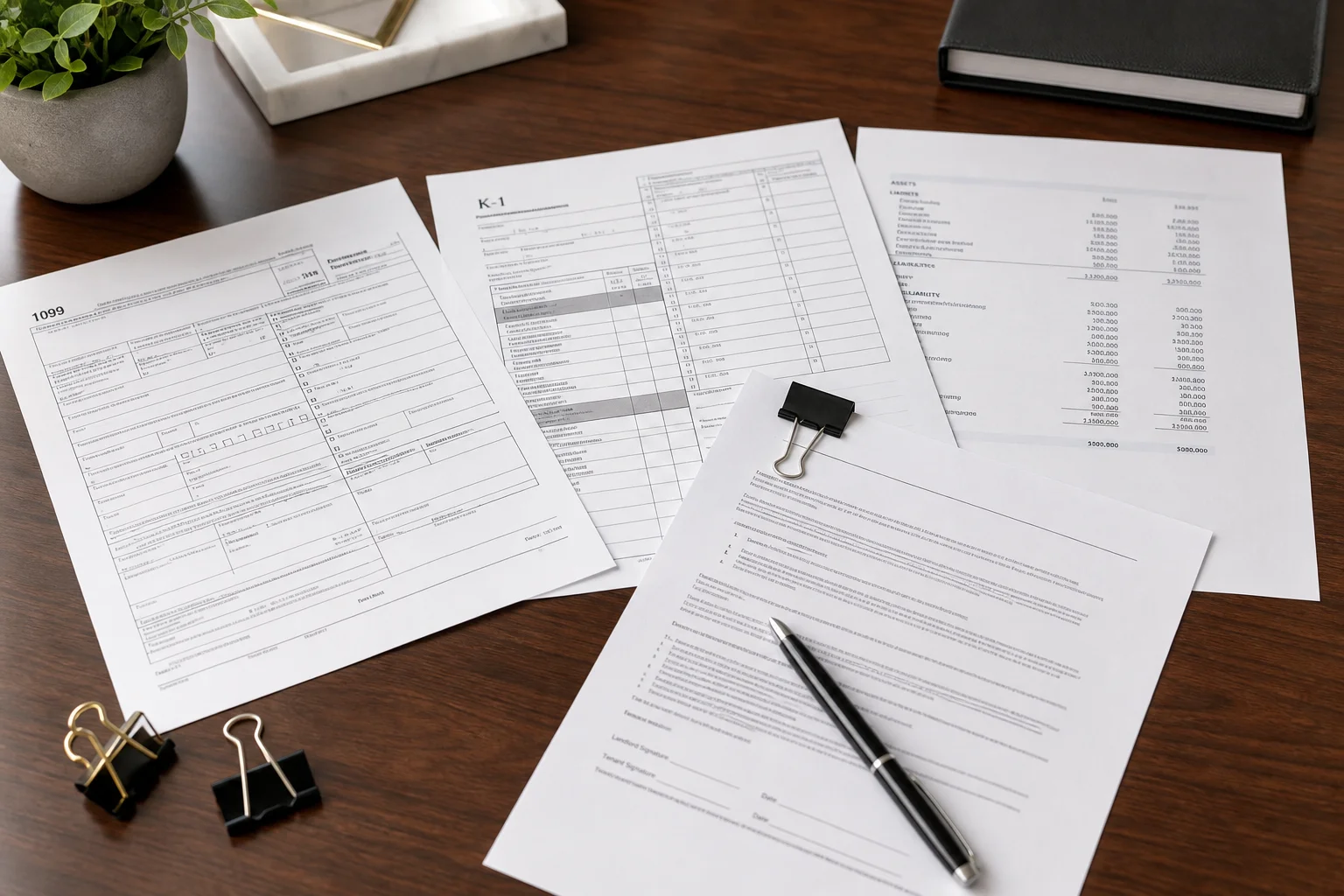
Real estate audits arise from several common situations: lender requirements tied to refinancing or acquisition, investor reporting obligations, HOA or commercial association bylaws, and IRS compliance reviews. Some audits are routine, built into partnership agreements or required by institutional lenders on an annual cycle. Others are triggered by specific events, such as a material change in ownership structure or a significant discrepancy flagged during a tax filing.
Understanding what initiates the audit process helps you prepare the right documentation from the start, rather than scrambling to locate records under deadline pressure. Property managers, boards, and investors who treat audit readiness as an ongoing operational standard move through each review faster and with greater confidence.
Core Financial Documents Your CPA Will Request
Your CPA firm will center the audit on your financial statements. Expect requests for the following documents, organized and ready before the first fieldwork meeting.
Income Statements and Balance Sheets
Auditors review income statements to verify that revenue from rents, parking, laundry, and other property sources is accurately reported. Balance sheets are examined to confirm asset valuations, loan balances, security deposit liabilities, and equity positions are correctly stated. Auditors cross-reference software-generated reports against bank statements and third-party confirmations to ensure the numbers reconcile cleanly.
General Ledger and Chart of Accounts
A clean, well-organized general ledger is the foundation of any smooth audit. Auditors trace individual transactions back to source documents, so each entry must include a clear description, date, and supporting reference. Vague or inconsistent account coding creates questions that slow the process and can lead to expanded testing of additional transactions.
Bank Reconciliations
All accounts, including operating, reserve, and security deposit accounts, must be reconciled monthly. Auditors compare ending bank balances to the general ledger and investigate any differences. Unreconciled items are a common flag that signals deeper investigation and can delay the audit timeline.
Building consistent bookkeeping systems throughout the year keeps these accounts audit ready and turns reconciliation into a routine habit instead of a year end scramble. These recurring bookkeeping workflows are what keep the numbers clean well before an auditor ever asks for them.
Lease and Tenant Records
Lease files are central to a real estate audit because they establish the contractual basis for every revenue line. Auditors will ask for executed lease agreements and any amendments, a current rent roll showing unit, tenant, lease term, and monthly rent, security deposit records reconciled to the balance sheet liability, and documentation of any rent abatements, concessions, or deferred payments.
Missing or unsigned lease amendments are among the most frequent documentation issues auditors raise. A complete lease file for every occupied and recently vacated unit is essential. Provide organized, clearly labeled files so auditors can access the information they need without additional rounds of requests.

Tax Records and IRS Compliance
Tax documentation is reviewed alongside the financial audit. Your CPA will want prior-year tax returns, depreciation schedules, and any IRS correspondence. For properties held in partnerships or LLCs, K-1 schedules distributed to partners must align with the entity's tax return and conform to applicable regulations.
Depreciation is frequently scrutinized because real estate assets have long lives and the rules governing cost segregation, bonus depreciation, and capital improvements can be complex. If your entity has made significant capital expenditures, auditors will confirm those costs were capitalized correctly rather than expensed in the year incurred.
Income Tax Services for real estate holdings add another compliance layer. Auditors cross-reference tax filings against financial statements to ensure consistency across both reports. Fund-level structures, such as REITs and multi-investor partnerships, add another layer of scrutiny, since auditors also verify that distributions and income allocations to investors match what the entity reported on its tax return and financial statements. Keeping those figures aligned throughout the year makes the entity-level portion of the audit far less time-consuming.
Real Estate Audit Preparation and Your Accounting Software
Most CPA firms accept data exports directly from accounting software. Platforms generate standard reports auditors rely on, including trial balances, aging reports, and transaction detail by account. Before the audit process begins, confirm your software exports match your reconciled bank statements and that your chart of accounts is structured for clear entity-level reporting.
If your entity manages mixed-use assets, such as a property combining residential, retail, and commercial space, revenue streams and cost allocations need to be separated by use type within the chart of accounts. Auditors follow the structure far more easily when each income and expense line is tied to a specific property segment instead of reported as one blended total.
If you are evaluating whether your current accounting support is audit-ready, look for transparent reporting, responsive communication, and demonstrated real estate industry expertise. Those are the same standards worth applying when hiring an accounting firm in the first place.
Frequently Asked Questions
How far back do real estate audit records need to go?
Most audits cover a single fiscal year, but auditors may request comparative periods, typically the prior year's financial statements, for context. According to IRS Publication 583 (2023), taxpayers should retain most records for three years under the basic statute of limitations and up to seven years for specific loss claims. Entities subject to state regulations or investor agreements may face longer retention requirements.
What is the difference between an audit and a review?
An audit provides the highest level of assurance a CPA can offer and involves independent verification of financial statements through direct confirmation with third parties, physical inspection, and detailed transaction testing. A review provides limited assurance through analytical procedures and inquiry, without the same depth. Lenders and institutional investors typically require a full audit for material real estate transactions.
How long does a real estate audit take?
The timeline depends on portfolio size, complexity, and how organized your records are. A single-property entity with clean books may complete the audit process in two to four weeks. A multi-property portfolio with complex ownership structures can take two to three months. Providing complete documentation at the initial request shortens the timeline substantially.
Can accounting software reduce audit preparation time?
Yes. Platforms that maintain a continuous audit trail, reconcile transactions consistently, and generate standard financial reports reduce the manual effort required to compile audit documentation. Consistent use of software throughout the year, rather than only at audit time, is what produces reliable records auditors can trust.
What are the most common issues auditors raise in real estate audits?
The most frequent findings involve unreconciled bank accounts, missing or unsigned lease documents, inconsistent capitalization of repair costs versus capital improvements, and discrepancies between tax filings and financial statements. Entities that practice real estate audit preparation year-round rather than reactively tend to avoid most of these issues.
Build an Audit-Ready Portfolio Year-Round
Consistent real estate audit preparation reduces the time, cost, and stress of every CPA review your portfolio will face. Organized financial records, complete lease files, and monthly reconciliations build the credibility that lenders, investors, and regulators expect. To discuss how outsourced accounting support keeps your portfolio audit-ready at all times, Lets Connect.
Want this handled for you?
Schedule a Call