
Table of Contents
- What Is a Qualified Opportunity Fund?
- The 90% Asset Test: Accounting Implications
- Opportunity Zone Fund Accounting and Reporting Requirements: Form 8996
- Investor-Level Tax Return Obligations
- Qualified Opportunity Zone Business Property: Operating-Level Compliance
- Frequently Asked Questions
- Partner With Real Estate Accounting Specialists for Opportunity Zone Compliance
Opportunity zone fund accounting and reporting requirements govern how qualified opportunity funds certify compliance with the IRS, test asset composition twice yearly, and file disclosures that protect investors' tax deferral positions. From Form 8996 certification to investor-level tracking on each annual Income Tax Services filing, these obligations must be maintained with precision across every year of the hold period.
By REA Team, Property Management Experts
What Is a Qualified Opportunity Fund?
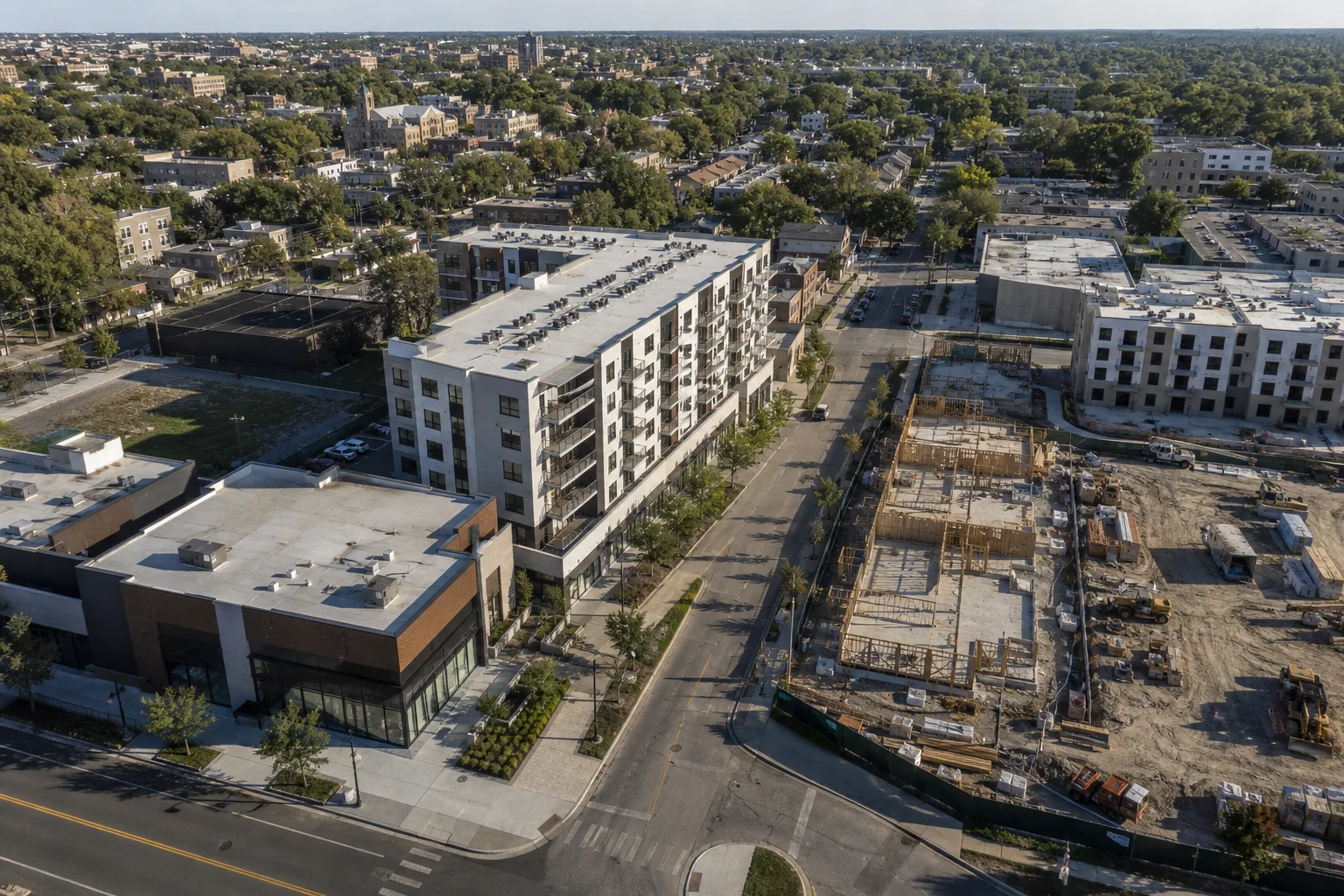
A qualified opportunity fund is an investment vehicle organized as a corporation or partnership that self-certifies with the IRS and holds at least 90% of its total assets in qualified opportunity zone property. Congress created opportunity zones under the Tax Cuts and Jobs Act of 2017, designating roughly 8,700 low-income census tracts as eligible for private investment. The universe of opportunity funds now spans residential rentals, commercial redevelopments, and mixed-use projects in those designated census tracts.
Investors channel existing capital gains into a qualified opportunity fund within 180 days of realizing those gains. In return, they receive three potential benefits: deferral of the original gain until December 31, 2026 or an earlier exit, a step-up in basis after five and seven years, and permanent exclusion of appreciation earned inside the fund after a ten-year hold.
The IRS classifies eligible holdings into three categories: qualified opportunity zone stock, qualified opportunity zone partnership interests, and qualified opportunity zone business property. Each category carries distinct acquisition rules that shape how the fund recognizes and reports its assets.
The 90% Asset Test: Accounting Implications
The 90% asset test is the structural backbone of QOF compliance. A qualified opportunity fund measures its assets on two dates each tax year: the last day of the first six-month period and the last day of the tax year. If the average of those two measurements falls below 90%, the fund owes a monthly penalty equal to the federal underpayment rate plus 3 percentage points, applied to the shortfall.
Accounting teams must maintain a rolling asset register that separates qualifying from non-qualifying holdings. Real estate used as business property must satisfy either the "original use" test or the "substantial improvement" test, requiring the adjusted basis of the building to be doubled within 30 months. Funds relying on the 31-month working capital safe harbor must keep a written plan, a written schedule, and evidence of consistent use to protect those reserves from triggering a penalty.
Opportunity Zone Fund Accounting and Reporting Requirements: Form 8996
Every qualified opportunity fund files Form 8996 with its federal income tax return each year. The form certifies the entity as a QOF and reports the 90% asset test calculation, including asset values as of each measurement date and any penalty owed for periods of non-compliance.
Accounting teams preparing Form 8996 must reconcile the form's figures with the fund's balance sheet as of each test date. Key reconciling items include construction in progress not yet placed in service, working capital safe harbor funds designated for a specific project, and non-qualifying assets such as sin business property. Qualified opportunity funds structured as partnerships also issue Schedule K-1 packages each year, reporting each partner's share of income, deductions, and credits, which flows to each investor's tax return.
IRS examiners reviewing a QOF look for internal consistency: the balance sheet, the asset schedule, and Form 8996 must all report the same facts across every filing period.
Investor-Level Tax Return Obligations
Investors who deferred capital gains into a qualified opportunity fund file Form 8997 with their annual tax return to track the deferred amount from entry through exit. The form captures the initial investment, the gain deferred, any inclusion events during the year, and basis adjustments at the five-year and seven-year marks.
Inclusion events that trigger gain recognition include selling or exchanging the QOF interest, making a gift to a non-spouse recipient, and certain corporate transactions. Investors who held their interest for at least five years before December 31, 2026 may exclude 10% of the original deferred gain, with an additional 5% exclusion for seven-year holders. Any appreciation earned inside a qualified opportunity fund after the original investment date is permanently excluded from income after a ten-year hold.
Fund-level accounting teams play a key role at exit. When an investor disposes of their interest, the fund must provide accurate basis documentation and fair market value support so the investor can complete Form 8949 correctly and defend the exclusion on audit.
Qualified Opportunity Zone Business Property: Operating-Level Compliance

When a QOF invests through a subsidiary entity classified as a qualified opportunity zone business, a second compliance layer applies. That operating entity must independently satisfy a 70% tangible property test, confirm the majority of its gross income is earned inside the opportunity zone, and perform a substantial portion of its services there.
For Commercial Real Estate assets that cross zone boundaries or serve mixed-use tenants, tracking lease income sources and operating activity by geography becomes a year-round task, and the same geographic allocation challenges show up whenever a single property serves multiple zone-eligible and non-eligible uses.
Opportunity zone fund accounting and reporting requirements extend through the full investment lifecycle, including the exit event. When an investor exits after a ten-year hold, the fund must supply valuation support that withstands IRS scrutiny. Many of these same fund-level controls, like reconciling asset schedules against investor reporting and documenting valuation methodology, mirror the fund-level compliance practices that apply across other real estate fund structures. Sponsors managing investor portfolios strengthen their systems with consistent chart-of-accounts structures, disciplined capital call and distribution tracking, and reconciliation processes that tie investor-level records back to the fund's asset schedule.
Frequently Asked Questions
What is Form 8996 and who must file it?
Form 8996 is the IRS certification and annual reporting form for qualified opportunity funds. Any corporation or partnership that self-certifies as a QOF must attach it to its federal income tax return. The form reports the 90% asset test results and calculates the monthly penalty for any period when qualifying assets fell below the required threshold.
Does real estate automatically qualify as opportunity zone business property?
No. Real estate qualifies as qualified opportunity zone business property only if the QOF or its subsidiary is the original user inside the opportunity zone, or if it substantially improves the property by doubling the adjusted basis of the building (land excluded) within 30 months. The property must be used in the active conduct of a qualifying trade or business.
When must investors report deferred gains on their tax return?
Deferred gains must be included in taxable income on the earlier of a qualifying inclusion event or December 31, 2026. Investors report this on their annual tax return using Form 8997 and Form 8949. Failing to report a qualifying inclusion event exposes the investor to penalties and interest on the unreported deferred gain amount.
What is the working capital safe harbor for opportunity zone businesses?
The working capital safe harbor permits a qualified opportunity zone business to hold cash designated for acquiring, constructing, or substantially improving tangible business property for up to 31 months. It requires a written plan, a written schedule showing the expected use timeline, and actual deployment consistent with both documents throughout the project period.
How do qualified opportunity funds handle exit valuations?
When an investor exits a qualified opportunity fund after a ten-year hold, they elect to step up basis to fair market value on Form 8949, eliminating tax on all post-investment appreciation. The fund's records must support that valuation: the K-1 history, asset composition schedule, and exit valuation methodology must all be internally consistent and defensible on audit.
Partner With Real Estate Accounting Specialists for Opportunity Zone Compliance
Qualified opportunity fund compliance spans entity structure, asset testing, annual certifications, and investor-level reporting across every tax year of the hold period. Lets Connect with the REA team to discuss how our dedicated real estate accounting services support QOF sponsors from fund formation through exit.
Want this handled for you?
Schedule a Call