
Table of Contents
- Red Flags 1 Through 4: Cash Flow, Rent Rolls, and Operating Costs
- Red Flag 1: Unexplained Cash Flow Gaps
- Red Flag 2: Inconsistent Rent Roll Data
- Red Flag 3: Operating Expense Ratios Outside Market Range
- Red Flag 4: Deferred Maintenance Costs Hidden in Operating Expenses
- Red Flags 5 Through 8: Liabilities, Taxes, Vacancy, and Capital History
- Red Flag 5: Undisclosed Liabilities and Vendor Balances
- Red Flag 6: Irregular or Incomplete Tax Records
- Red Flag 7: Vacancy Rates That Cannot Be Verified
- Red Flag 8: Missing or Fragmented Capital Expenditure History
- Building a Multi-Family Due Diligence Checklist That Captures Every Signal
- Frequently Asked Questions
- Get Accurate Numbers Before You Commit to a Multi-Family Acquisition
Spotting the 8 accounting red flags in multi-family real estate due diligence before closing protects your capital from costly post-acquisition surprises. Irregular cash flow statements, inconsistent rent rolls, hidden liabilities, and incomplete expense records are the most frequently overlooked signals. Thorough Real Estate Accounting review is the clearest defense against acquiring a financially troubled asset.
By REA Team, Property Management Experts
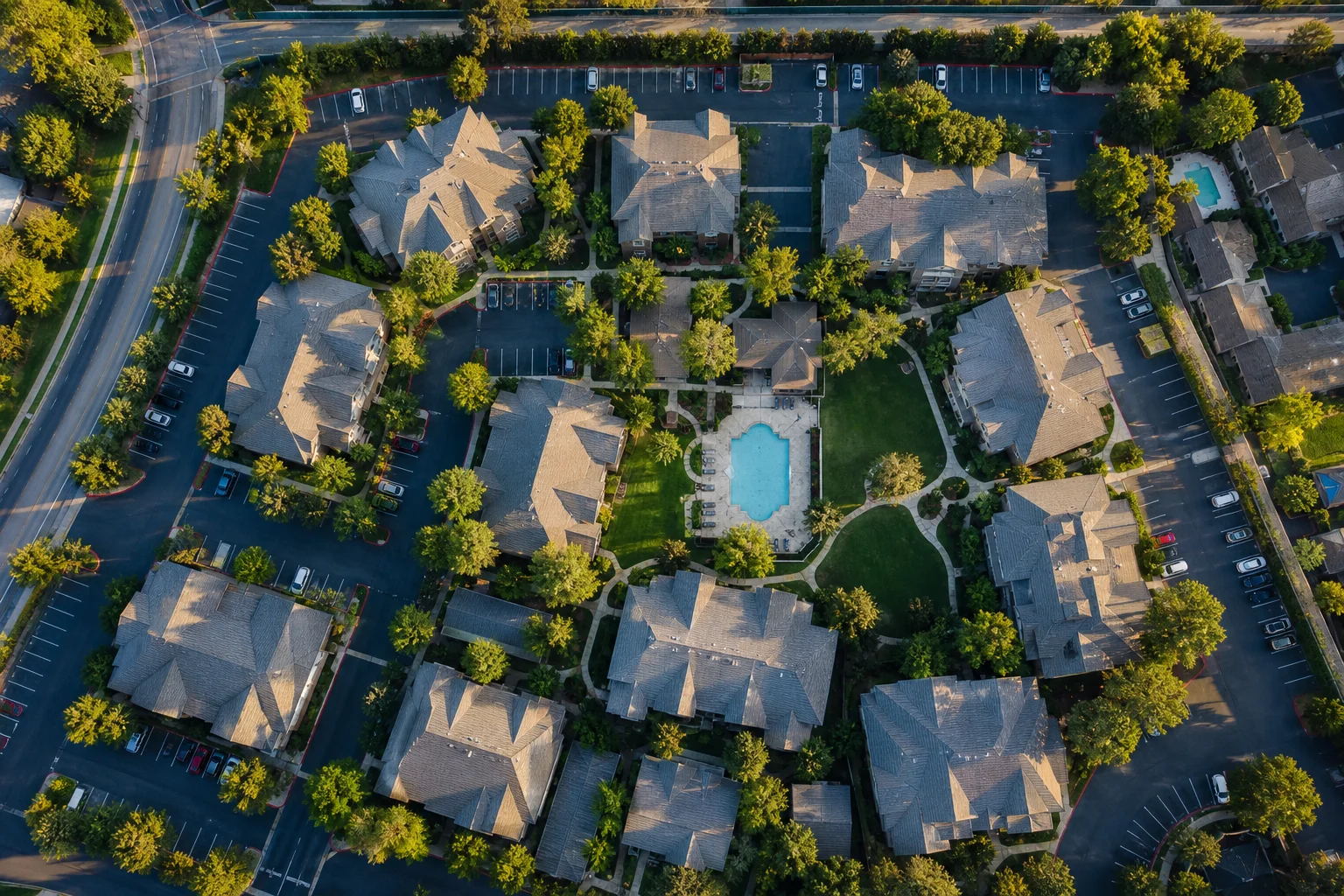
Multi-family acquisitions carry a risk profile that differs meaningfully from single-family investments. With dozens or hundreds of units under one purchase agreement, even small per-unit accounting errors compound into significant problems that surface only after closing. Research published by the Urban Land Institute in their annual Emerging Trends in Real Estate report (2023) consistently identifies financial statement review failures as a primary driver of post-acquisition valuation gaps across multifamily and commercial real estate portfolios.
The due diligence process for multi-family properties must go beyond a physical inspection. It requires a systematic review of operating statements, expense records, tax filings, capital expenditure logs, and rent rolls, all cross-referenced against current market benchmarks. Buyers who compress or skip this review often discover that the purchase price was built on inflated net operating income figures that collapse once the property transfers.
A property acquired with undetected accounting irregularities rarely self-corrects after closing. The new owner inherits every hidden liability, misclassified expense, and deferred cost that escaped the review process. That is why an independent accounting assessment, performed before any purchase agreement is executed, is the correct standard for serious multi-family investors and property managers.
Red Flags 1 Through 4: Cash Flow, Rent Rolls, and Operating Costs
Red Flag 1: Unexplained Cash Flow Gaps
Cash flow is the foundation of any multi-family valuation. When a property's trailing-12-month cash flow statements show large, unexplained fluctuations between months, that signals income instability or concealed expenses. Common causes include undisclosed owner-paid utilities, irregular maintenance billing cycles, and management fees charged inconsistently across reporting periods.
Request monthly cash flow statements covering at least 24 months and compare them against corresponding bank statements. Any gap between reported income and actual deposits warrants a written explanation supported by source documentation.
Red Flag 2: Inconsistent Rent Roll Data
A rent roll should reconcile exactly with lease agreements, actual deposits, and the general ledger. When the numbers do not align, the rent roll has been manipulated or the property management platform is unreliable. Professional platforms generate audit-ready rent roll exports, so unexplained discrepancies in a professionally managed asset have no defensible explanation.
Patterns to investigate: units listed as occupied with no corresponding lease on file, rent amounts that differ from executed lease terms, and security deposit balances that do not match the recorded liability. Each inconsistency requires a full lease file review before proceeding.
Red Flag 3: Operating Expense Ratios Outside Market Range
Industry underwriting practice places operating expense ratios for stabilized multi-family properties between 35% and 55% of gross potential rent, shifting based on market, asset class, property age, and utility structure. A ratio consistently below 30% almost always indicates deferred maintenance, underreported repair costs, or a management fee excluded from the expense summary that the new owner will absorb immediately.
Accurate expense categorization is what keeps a ratio like this from hiding a manipulation in plain sight. The same bookkeeping systems and processes that support clean operating statements during ownership are what a due diligence reviewer relies on to catch these discrepancies before closing.
Red Flag 4: Deferred Maintenance Costs Hidden in Operating Expenses
Some sellers reclassify capital expenditures as routine operating expenses to suppress reserve fund requirements and make the property appear capital-light. Others capitalize recurring repairs to inflate NOI artificially. Either manipulation distorts the true cost basis and produces a purchase price that does not reflect economic reality.
Request a five-year capital expenditure log and compare it against standard component life expectancy for roofing, HVAC, plumbing, and electrical systems. Costs that should appear as capital items showing up in operating expenses, or recurring repairs that have been capitalized, are direct signals of financial reporting manipulation. A single missed roof replacement cycle can represent hundreds of thousands of dollars in deferred cost not reflected in the asking price.
Red Flags 5 Through 8: Liabilities, Taxes, Vacancy, and Capital History
Red Flag 5: Undisclosed Liabilities and Vendor Balances
Unpaid vendor invoices, deferred utility bills, and outstanding contractor balances do not always surface on a seller-prepared income summary. A thorough accounts payable review should confirm all vendor balances are current and that no mechanic's liens have been recorded against the property.
For Commercial Real Estate assets that include a ground-floor retail or mixed-use component, also review tenant improvement allowance obligations that survive the sale and transfer directly to the buyer. These amounts are rarely disclosed voluntarily and can represent significant undisclosed exposure.
Red Flag 6: Irregular or Incomplete Tax Records
Property tax records should reconcile directly against the general ledger. When payments are missing, late, or show active assessment disputes, the buyer inherits that exposure at closing. Request copies of tax bills and payment confirmations for the prior three years. For properties in jurisdictions with rent control ordinances, affordable housing compliance requirements, or special assessment districts, verify that all compliance fees and required reserve contributions are fully current.
Accurate tax normalization is central to investment valuation. Buyers typically adjust the trailing property tax expense to reflect what the property will actually owe after the sale, since many jurisdictions reassess taxable value at transfer and the seller's historical tax line no longer applies going forward. Skipping this adjustment overstates net operating income and inflates the resulting purchase price.
Red Flag 7: Vacancy Rates That Cannot Be Verified
Sellers sometimes report economic occupancy in place of physical occupancy, or quote occupancy over a period that flatters the asset. Request a unit-by-unit occupancy history for the prior 24 months, cross-referenced with rent roll data and bank deposit records. Vacancy rates that appear strong on a summary but produce minimal rental income relative to gross potential rent indicate concession-heavy leasing, short-term tenant stacking before the listing, or direct reporting manipulation.
Physical occupancy measures the percentage of units with a tenant in residence. Economic occupancy measures the percentage of gross potential rent actually collected after concessions and delinquencies. A property can show 95% physical occupancy but only 78% economic occupancy, and that gap is a direct measure of leasing quality and real investment return from the first month of ownership.
Red Flag 8: Missing or Fragmented Capital Expenditure History
A well-maintained multi-family property carries documented history of all major system replacements: roof, HVAC, elevators, common area renovations, plumbing resets, and parking surface repairs. When no capital expenditure records exist, the buyer must budget conservatively for near-term capital requirements not captured in the asking price.
Supporting documents to request include insurance claim records, building permit history from the municipality, and contractor invoices for work completed in the prior five years. Missing capital history forces the buyer to commission an independent property condition assessment, which adds cost and time and introduces risk if the report surfaces unexpected scope.

Building a Multi-Family Due Diligence Checklist That Captures Every Signal
A structured due diligence checklist is the operational backbone of any multi-family acquisition. The checklist should cover five workstreams: financial statement review, rent roll reconciliation, legal and encumbrance verification, physical condition assessment, and tax compliance confirmation.
For the financial workstream, request the trailing-12-month and trailing-3-month operating statements, the prior two years of tax returns (Form 8825 for partnerships, Schedule E for individual owners), the current rent roll with full lease expiration schedule, all bank statements for operating and reserve accounts, and a complete accounts payable and receivable aging report. These documents establish the baseline against which every red flag is measured.
The legal workstream covers title search results, lien search output, existing mortgage payoff statements, and any pending or recently settled litigation involving the property or the business entity that holds it. Always cross-check the legal description on the deed against the physical address and parcel number in county records to confirm no boundary discrepancies exist.
Tax compliance verification should include not just current-year property tax payment but also a review of any open appeals, assessment protest filings, or deferred tax obligations tied to prior exemption programs. These obligations transfer with the property unless explicitly carved out in writing.
Assembling the right review team matters as much as the checklist itself. Confirm that a proposed accounting firm has direct multi-family transaction experience before the engagement begins, using a short list of vetting questions for accounting firms to structure that conversation.
For properties exceeding 50 units, the financial review should be performed by an independent third-party accounting firm. The cost of outside review is consistently less than the cost of a single undiscovered red flag materializing in the first year of ownership.
Frequently Asked Questions
What documents are essential for multi-family due diligence?
The core document set includes trailing-12-month and trailing-3-month operating statements, the current rent roll with lease expiration dates, 24 months of bank statements for all property accounts, three years of property tax bills and payment confirmations, a complete capital expenditure log, accounts payable and receivable aging reports, and copies of all active leases. These documents form the foundation of any credible financial review.
How long does a thorough accounting due diligence process take?
For a standard multi-family property of 20 to 100 units, a thorough accounting review typically requires 10 to 20 business days from document delivery to final report. Larger assets, properties with complex financing, or portfolios spanning multiple parcels require 30 to 45 days. Compressed timelines increase the probability of missed red flags and should be negotiated carefully within the purchase agreement.
What is the difference between physical and economic occupancy?
Physical occupancy measures the percentage of units with a tenant currently in residence. Economic occupancy measures the percentage of gross potential rent actually collected after concessions, delinquencies, and non-paying tenants. A property can show 95% physical occupancy but only 78% economic occupancy. Always request both figures and verify them independently against deposit records before finalizing any purchase price.
When should a buyer walk away from a multi-family deal?
Walk away when material red flags cannot be explained or corrected before closing. Unexplained cash flow gaps with no supporting documentation, a rent roll that does not reconcile with bank deposits, undisclosed mechanic's liens, or missing tax payment records are conditions that require a price adjustment or escrow holdback. If the seller declines both remedies, the deal carries unquantifiable financial risk.
Can accounting red flags be resolved before closing?
Some red flags resolve cleanly with additional documentation and seller explanations. Others, including undisclosed liabilities, deferred maintenance with no reserve funding, and irregular tax records, require price adjustments, escrow holdbacks, or specific seller representations and warranties in the purchase agreement. A qualified accounting team will categorize each finding by severity and recommend the appropriate resolution path.
Get Accurate Numbers Before You Commit to a Multi-Family Acquisition
Multi-family due diligence is not a formality and cannot be compressed without real consequence. The 8 accounting red flags in multi-family real estate due diligence reviewed above are the most common points where acquisitions go wrong, and each one is identifiable before closing with the right review process in place. If you are preparing for a multi-family acquisition, Lets Connect to discuss how REA supports buyers through every stage of the due diligence process.
Want this handled for you?
Schedule a Call